
Look for a combination, not a red patch alone
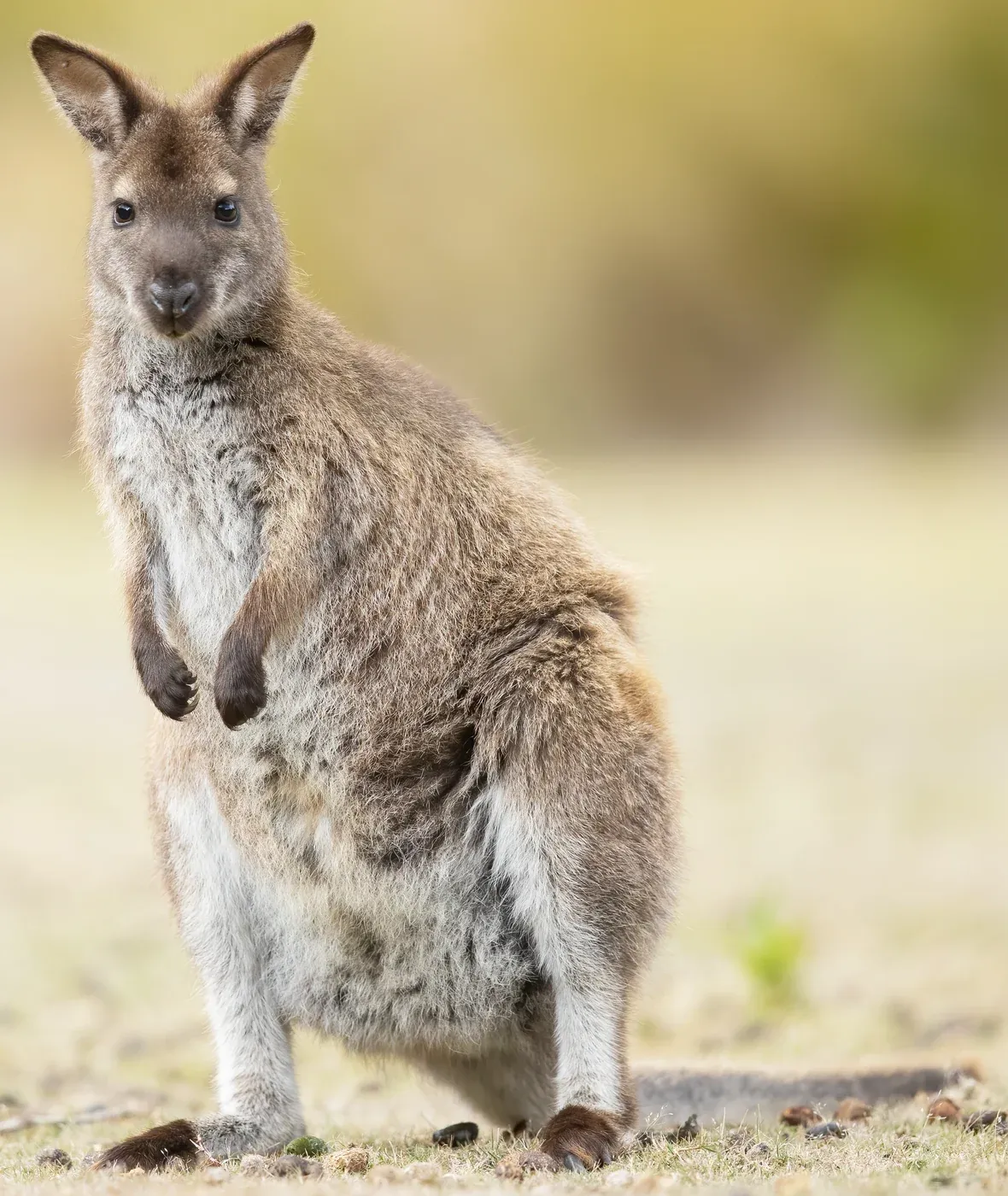
Red-necked Wallabies are named for rusty-red colouring around the shoulders and upper back. The black nose and paws and pale upper-lip stripe add useful context. The body is generally grey-brown; colour varies with the view and light, so one reddish patch is not a complete identification.
Swamp Wallabies provide a useful nearby comparison: their coat is generally darker, with a light cheek stripe and reddish-yellow underside. Both can be partly hidden in vegetation. Compare the body pattern, face and broad region rather than declaring the smaller animal a wallaby species by size alone.
Adult males are generally larger than females. An unmeasured small animal could still be a female or a younger individual, however. This guide does not offer a colour-based sex rule or an age estimate from a single photograph.
Sources: Bundaberg Regional Council: Swamp and Red-necked Wallabies · NSW National Parks: Swamp Wallaby
Woodland shelter beside feeding ground
The species occurs in eastern Australia and Tasmania, including coastal scrub and sclerophyll forest. Sclerophyll vegetation has tough, leathery leaves; the word describes a vegetation type, not a special wallaby diet.
In Tasmania, where it is called the Bennetts Wallaby, NRE describes a mosaic of pasture used for feeding and bushland used for shelter. Wallabies generally graze grasses and herbs, often later in the day and at dusk.
They are largely solitary, yet loose gatherings can share a feeding area. Seeing several together does not demonstrate a fixed family group, and seeing one alone does not show that it needs another animal brought to it.
Sources: Bundaberg Regional Council: Swamp and Red-necked Wallabies · NRE Tasmania: Bennetts Wallaby
Tasmania is not the mainland breeding calendar
NRE Tasmania describes a distinct late-summer to early-autumn birth season for Bennetts Wallabies. Mainland populations of the same species can have births throughout the year. A national calendar that applies the Tasmanian peak to every mainland locality would erase an important regional difference.
Young remain in the pouch for months and continue suckling after pouch life ends. Leaving the pouch, grazing beside the mother and becoming fully weaned are different milestones. A joey at foot may still be dependent.
The reference photograph is a Tasmanian animal at Adventure Bay. It is an example of appearance and place, not a prediction of the breeding stage of other wallabies in the same month.
Sources: NRE Tasmania: Bennetts Wallaby
Give mothers, young and shelter room
Do not feed or approach wallabies, and keep a clear space between a mother and young. For an animal that may be injured or unwell, seek licensed wildlife help rather than trying to capture it.
For a useful record, note the broad region, the visible face and shoulder pattern, the habitat and what the animal was doing before it noticed you. Link the observation to the comparison guides and keep uncertain age or sex unassigned.
Sources: Queensland Government: living with kangaroos and wallabies