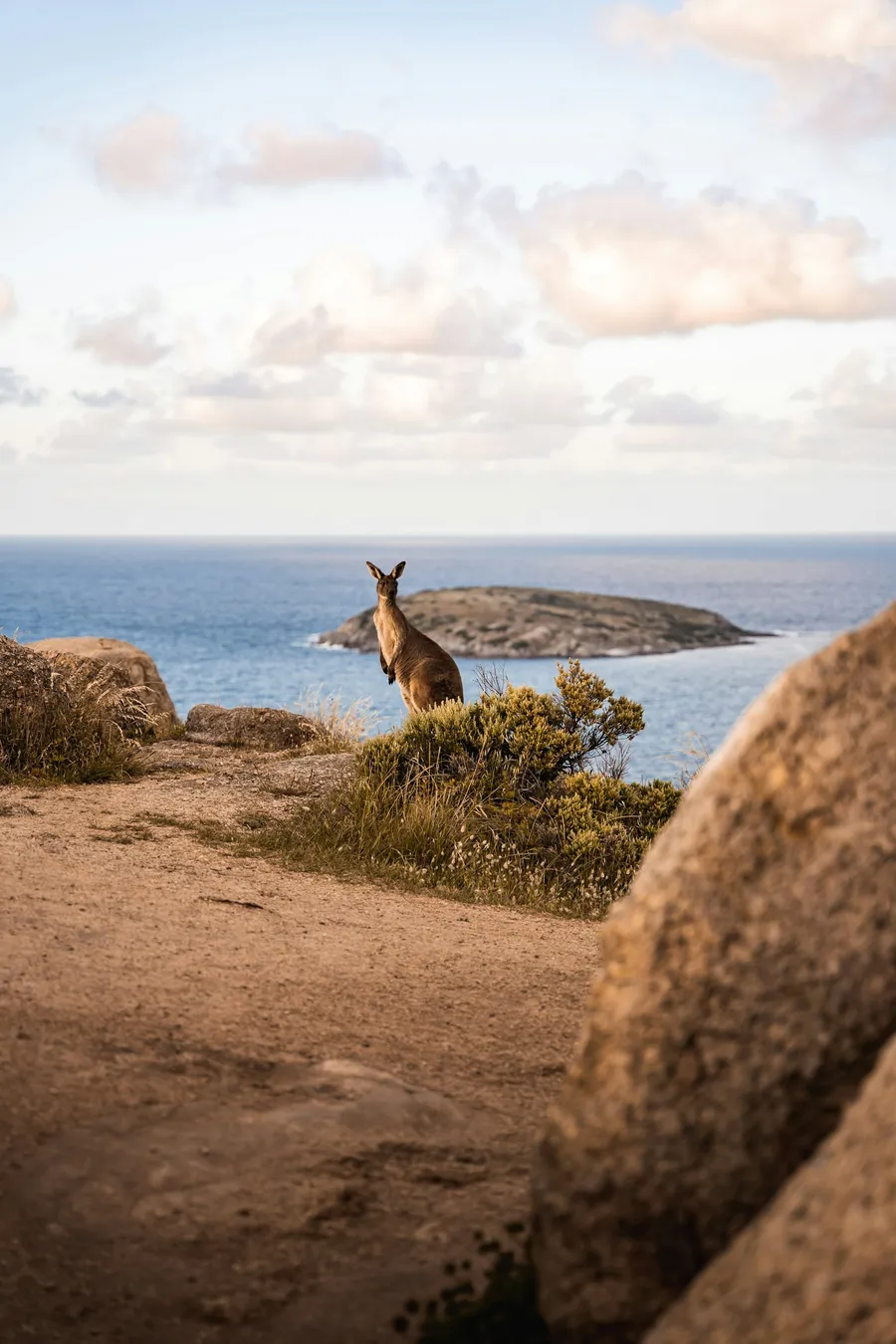
Recognise and understand
Large hind feet, strong back legs and a balancing tail are useful starting points for recognising this group. Kangaroos and wallabies are marsupials known as macropods, meaning big foot. These names cover many species, not one animal with one way of life.
Habitat and behaviour
Where you look matters. Red kangaroos use open plains, while rock-wallabies live around boulders and cliffs. Other wallabies occur in settings ranging from dry country to woodland and rainforest.
Kangaroos and wallabies are generally most active around dusk, dawn and at night. Watch quietly from a distance and notice how an animal uses shelter and open space, rather than moving closer to provoke a response.
Living alongside kangaroos and wallabies
Treat a familiar visitor as a wild animal. Do not offer kangaroos food: handouts can change their behaviour and cause illness. Keep dogs away, supervise children and give animals room to move away.
Never step between a female and her joey, and stay well away from males that are sparring. An animal that seems relaxed can still react defensively if crowded or startled. If you see an injured animal, contact a licensed wildlife rescue group.