
Mostly black is the starting clue
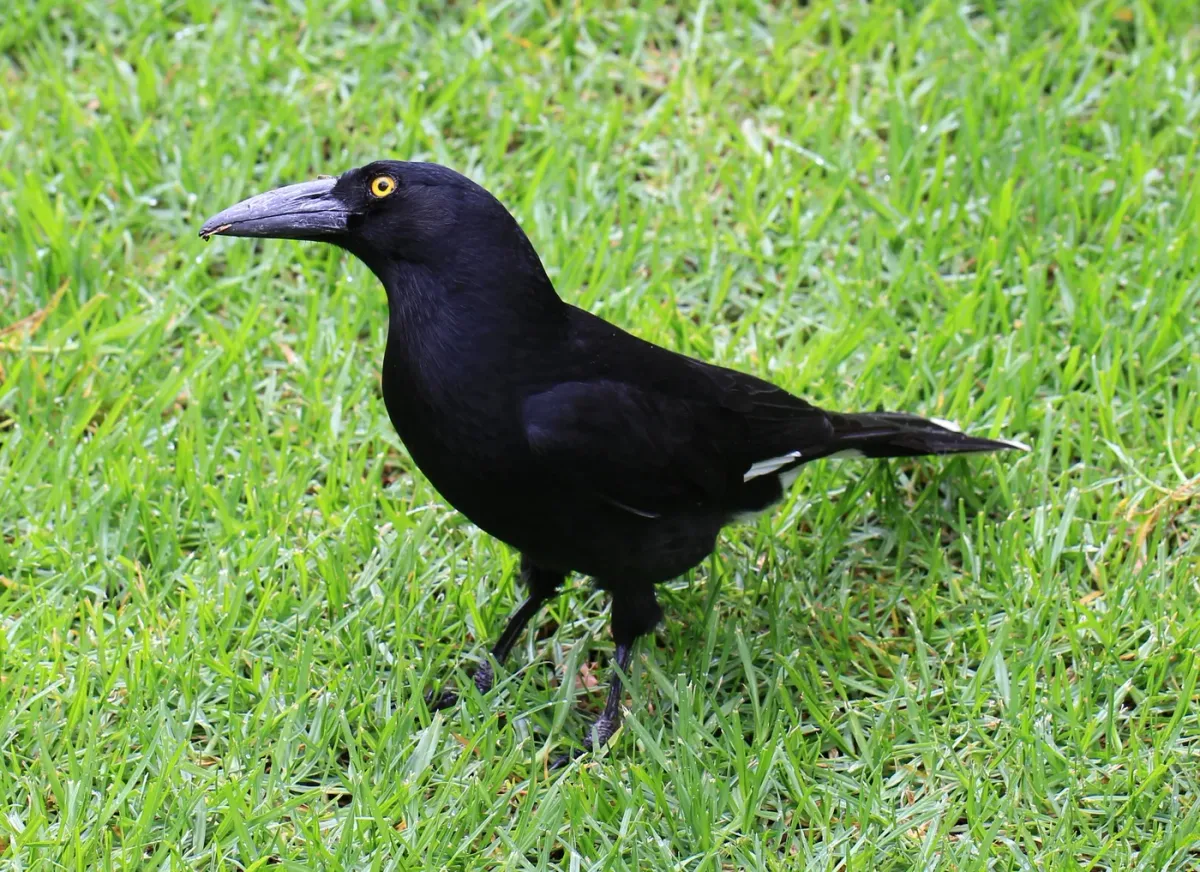
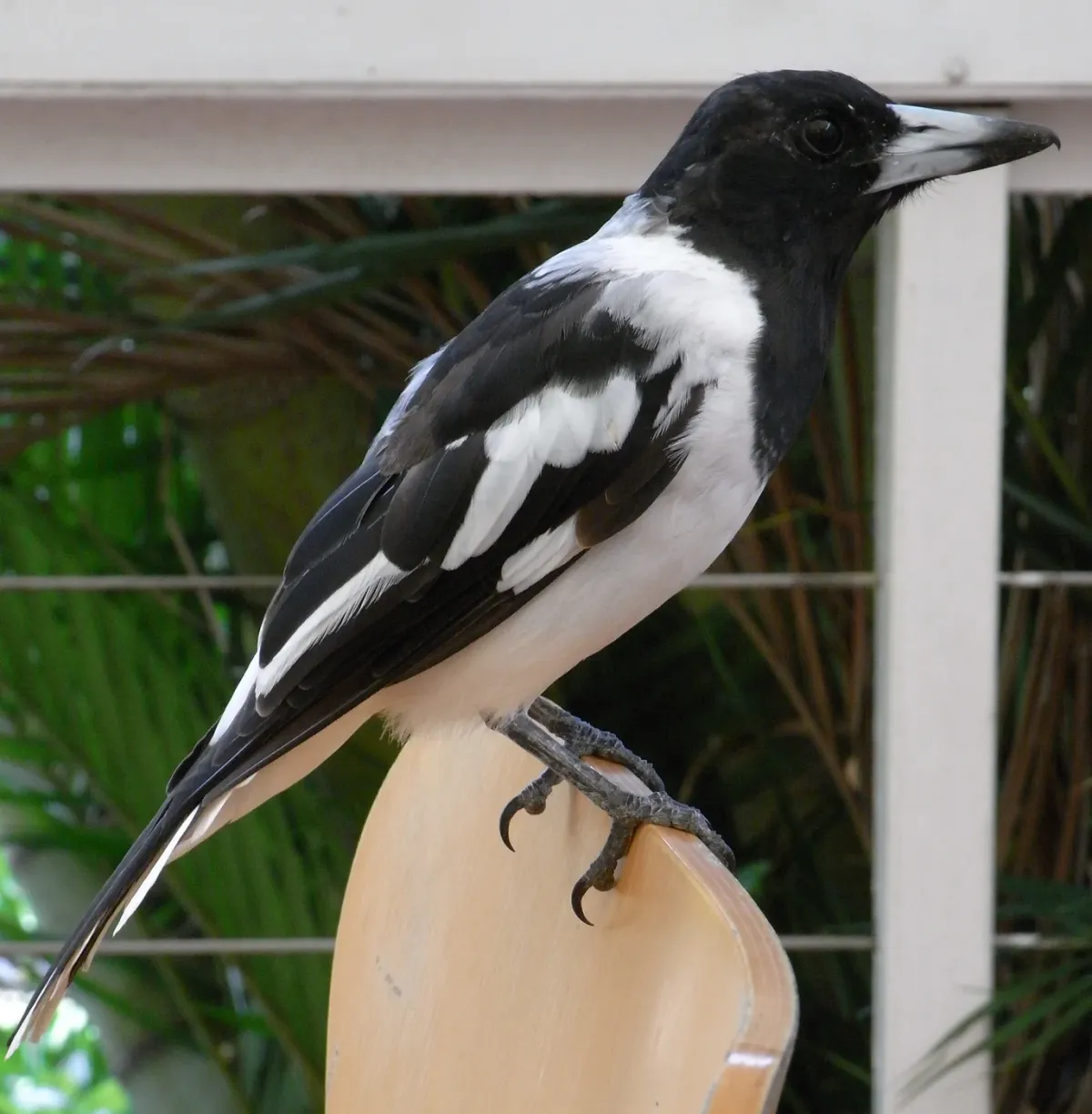
An adult Pied Currawong combines a bright yellow iris, a large black bill and a mostly black body. The white is limited mainly to wing and tail patches; it does not form the broad white collar and white belly of an adult Pied Butcherbird. An Australian Magpie has more prominent pale nape and shoulder markings and a different bill.
Look for several marks in the same view. An eye hidden in shade cannot be assumed yellow, and a folded wing conceals some white. A silhouette heard calling overhead may be identifiable only after another view. Do not turn an obscured feature into an absent feature.

Sources: Australian Museum: Pied Currawong · BirdLife Australia: Pied Currawong and call recording
Young birds and the limits of sexing
Young Pied Currawongs are browner and less glossy than adults. Adult males and females are broadly similar; a female may have greyer underparts, but that tendency is not a dependable sex assignment from one photograph.
Keep species, age and sex as separate questions. Brownish plumage can support a young-bird possibility without establishing an exact age. Light, feather wear and obscured patches also matter. The absence of a bright adult appearance does not make the bird a different species or an adult female.
Sources: Australian Museum: Pied Currawong · BirdLife Australia: Pied Currawong and call recording
Ringing calls and seasonal gatherings
The far-carrying ringing call gives the currawong its name; croaks and whistling sounds are also part of the repertoire. BirdLife’s recording is a useful starting comparison, rather than a complete catalogue of every sound a bird may make.
Mainland Pied Currawongs occur through eastern Australia, from northern Queensland to Victoria, rather than across every Australian state. In the south, some move from higher country towards lowlands in colder periods. Large flocks outside the breeding season can contrast with the pairs and family groups seen at other times. A change in the number visible in one garden is not, by itself, proof of local population growth.
Sources: Australian Museum: Pied Currawong · BirdLife Australia: Pied Currawong and call recording
A varied diet, not a reason for meat handouts
Currawongs use forests, woodlands and treed suburbs. Their diet includes berries, insects and small animals, including young birds. They may store prey in a crevice or fork for later. These are native predators using several food sources, not birds whose needs can be represented by a bowl of mince.
WIRES advises against routine handouts and favours natural habitat. In a garden, retain useful cover and varied locally suitable plants rather than concentrating large birds at food. Dense shelter matters to smaller wildlife too. Seeing predation is not permission to interfere with nests, trap a currawong or attempt to reorganise the food chain.
Sources: Australian Museum: Pied Currawong · WIRES: Let nature feed itself · WIRES: Wildlife-friendly gardens
High nests and a careful record
A stick-bowl nest is built high in a tree fork. The female constructs and incubates, with the male supplying food to her; parental roles change as the chicks develop. The Museum gives July–January as a broad breeding period, not a guarantee for every place or year.
Write down broad region, eye colour if genuinely visible, bill colour, extent of white and call rhythm. Leave nests undisturbed and avoid playback. If the bird is hurt, entangled or has been struck, use licensed help promptly. Identification should never delay rescue advice or involve a test of whether an animal can fly.
Sources: Australian Museum: Pied Currawong · WIRES: Helping chicks