
Use the hood and bill together
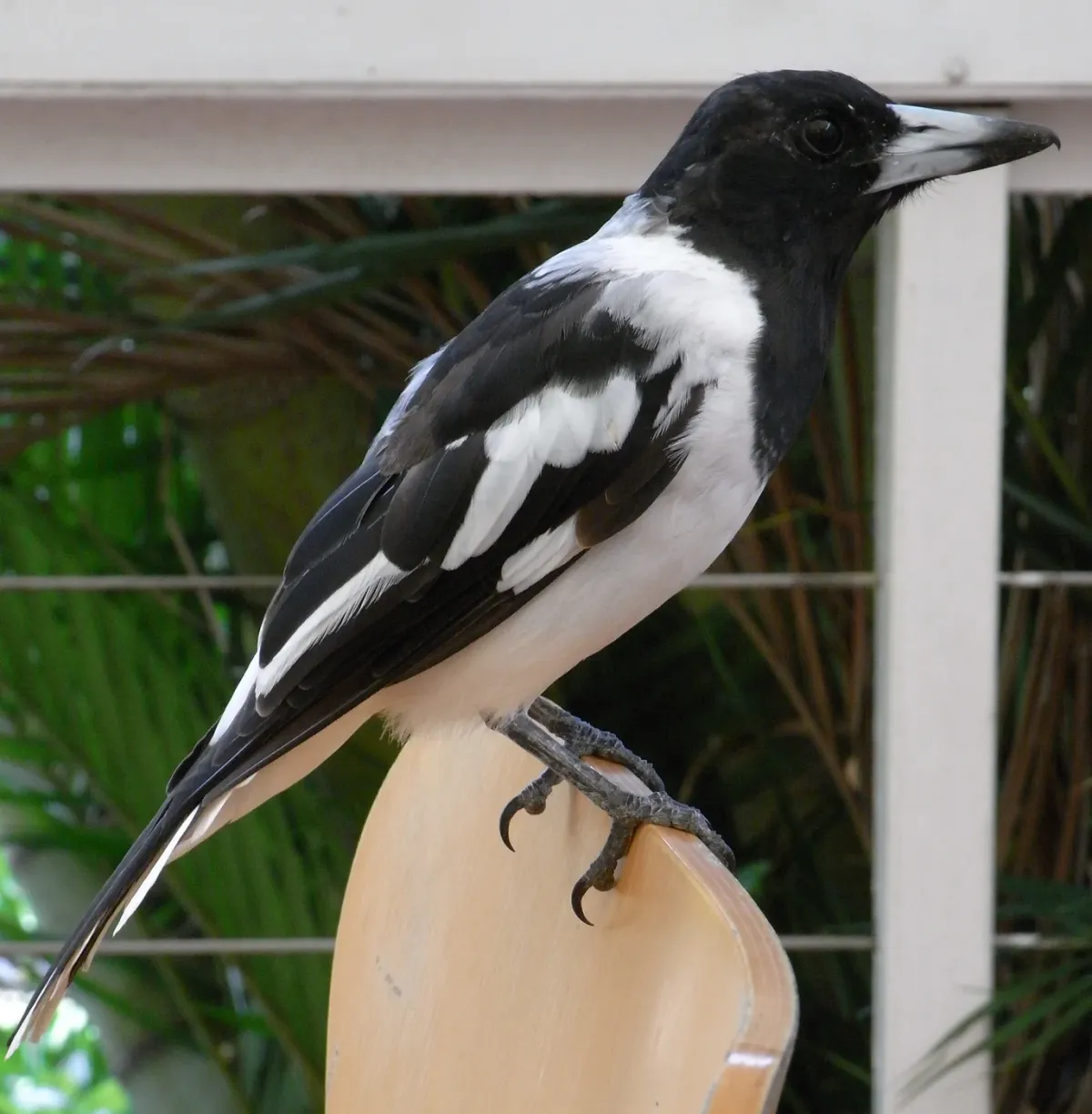
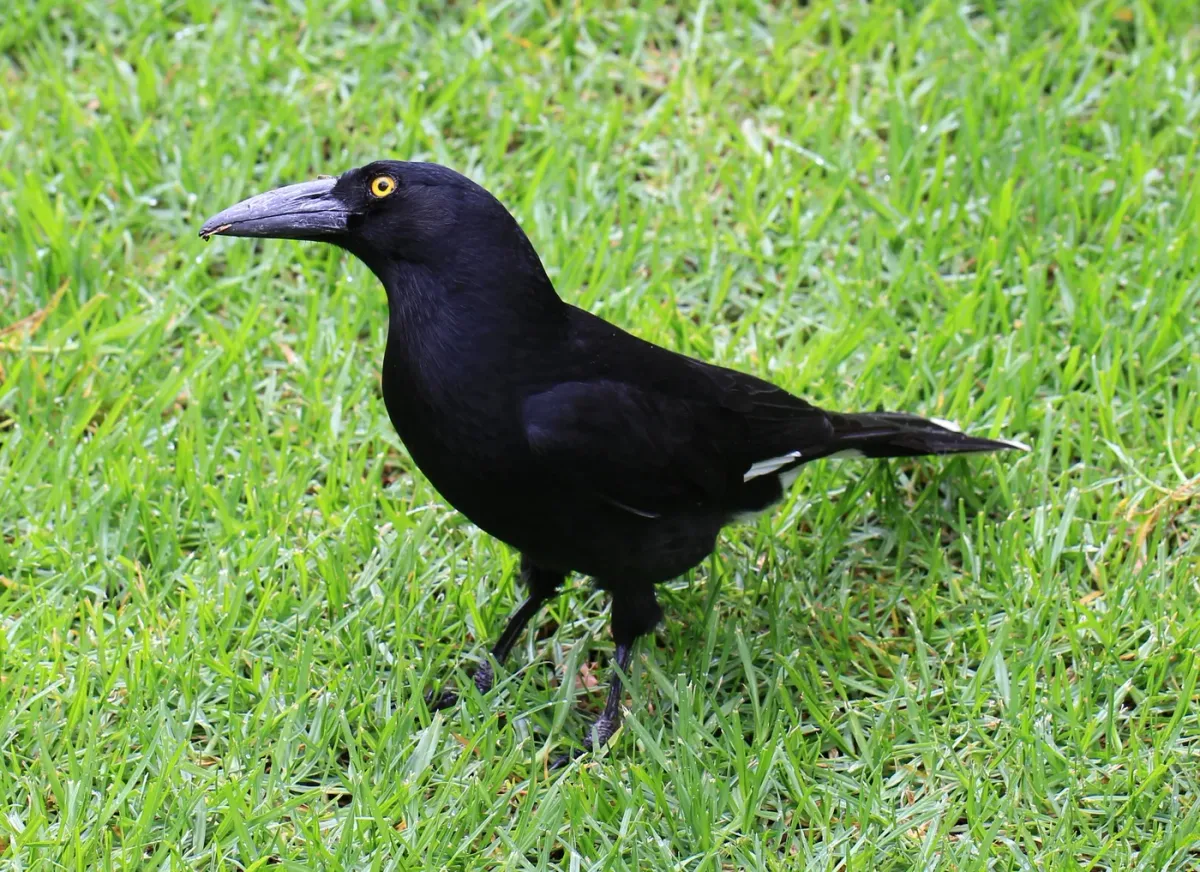
A typical adult Pied Butcherbird has a black head and throat, broad white collar, white lower belly and a long pale-grey bill with a black hooked tip. The eye is dark. Together these marks distinguish it from the yellow-eyed, mostly black Pied Currawong and the heavier Australian Magpie.
The hook may be hard to see in a frontal view. If a bird turns naturally, compare the bill in profile and follow the white collar around the nape. The contrasting pattern is more useful than deciding it looks “magpie-sized”. Perspective and a cropped photograph make apparent size unreliable.

Sources: Australian Museum: Pied Butcherbird · BirdLife Australia: Pied Butcherbird and call recording
Brown young birds and subtle adult differences
Juveniles are not miniature black-and-white adults. Brown replaces much of the black, the hood and collar are poorly developed, and pale areas have buff tones. Immature plumage changes towards the sharper adult pattern, so a partly patterned bird need not fit either endpoint perfectly.
The Museum and BirdLife describe the sexes as similar. The Australian Bird Study Association records finer average adult differences in gloss, collar and back colour, as well as overlapping measurements. These in-hand distinctions do not justify sexing every garden photograph. A dull brown young bird can be male or female; leave sex unknown unless there is reliable additional evidence.
Sources: Australian Museum: Pied Butcherbird · BirdLife Australia: Pied Butcherbird and call recording · Australian Bird Study Association: Pied Butcherbird, Bird in the Hand
Song, mimicry and regional context
The song consists of clear, flute-like notes and may involve several birds taking turns. Pied Butcherbirds can also mimic other sounds, so one unfamiliar phrase need not belong to a second bird. BirdLife’s recorded example helps establish the quality and spacing of the notes.
The species occupies much of mainland Australia, especially drier forests and woodland, and also visits parks and houses. BirdLife qualifies the broad range: it is absent from Tasmania, much of the southern and south-eastern coast, and the driest interior. Regional bill and collar variation is described by the Museum; a slightly different collar is not automatically an age or sex difference.
Sources: BirdLife Australia: Pied Butcherbird and call recording · Australian Museum: Pied Butcherbird
Perch hunting and shared work at the nest
Birds often watch from an exposed perch before dropping to the ground for prey. Large insects and small vertebrates are part of their food, and hunting can be solitary, paired or within a larger family group. A bird waiting on a fence may be surveying a feeding patch, rather than asking a person for food.
The female builds the stick-and-twig nest and incubates. Other group members can supply food, and breeding timing varies across the range. Seeing several birds near a nest is therefore not enough to infer several breeding pairs. Watch from a distance and let the birds’ normal movements supply the evidence.
Sources: BirdLife Australia: Pied Butcherbird and call recording · Australian Museum: Pied Butcherbird
Keep a listening and identification record
Note broad region, the hood and belly pattern, bill shape and whether the song alternates between perches. Compare a recording quietly at home; do not use playback to make a hidden bird emerge. A photograph documents the view you had, not every field mark the species possesses.
Avoid mince and other handouts. Natural foraging habitat is more useful than teaching a bird to approach people. If an animal appears hurt, has met a cat or vehicle, or needs dependent-young advice, contact a licensed rescue group or vet. Do not feed, catch or move it to confirm its identity.
Sources: WIRES: Let nature feed itself · WIRES: Wildlife-friendly gardens · WIRES: Helping chicks