
The face is more useful than a white silhouette
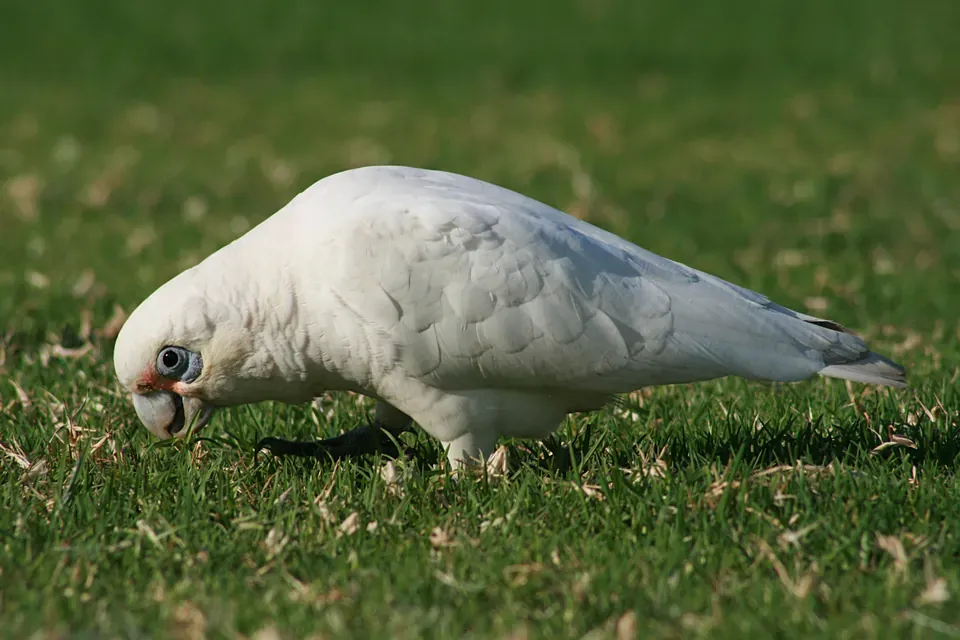
A Little Corella is mostly white, with a short pale bill, bare blue skin around the eye and a small pink area between eye and bill. Yellow below a wing or tail is not decisive: other white cockatoos share it. A folded crest can also be difficult to see.
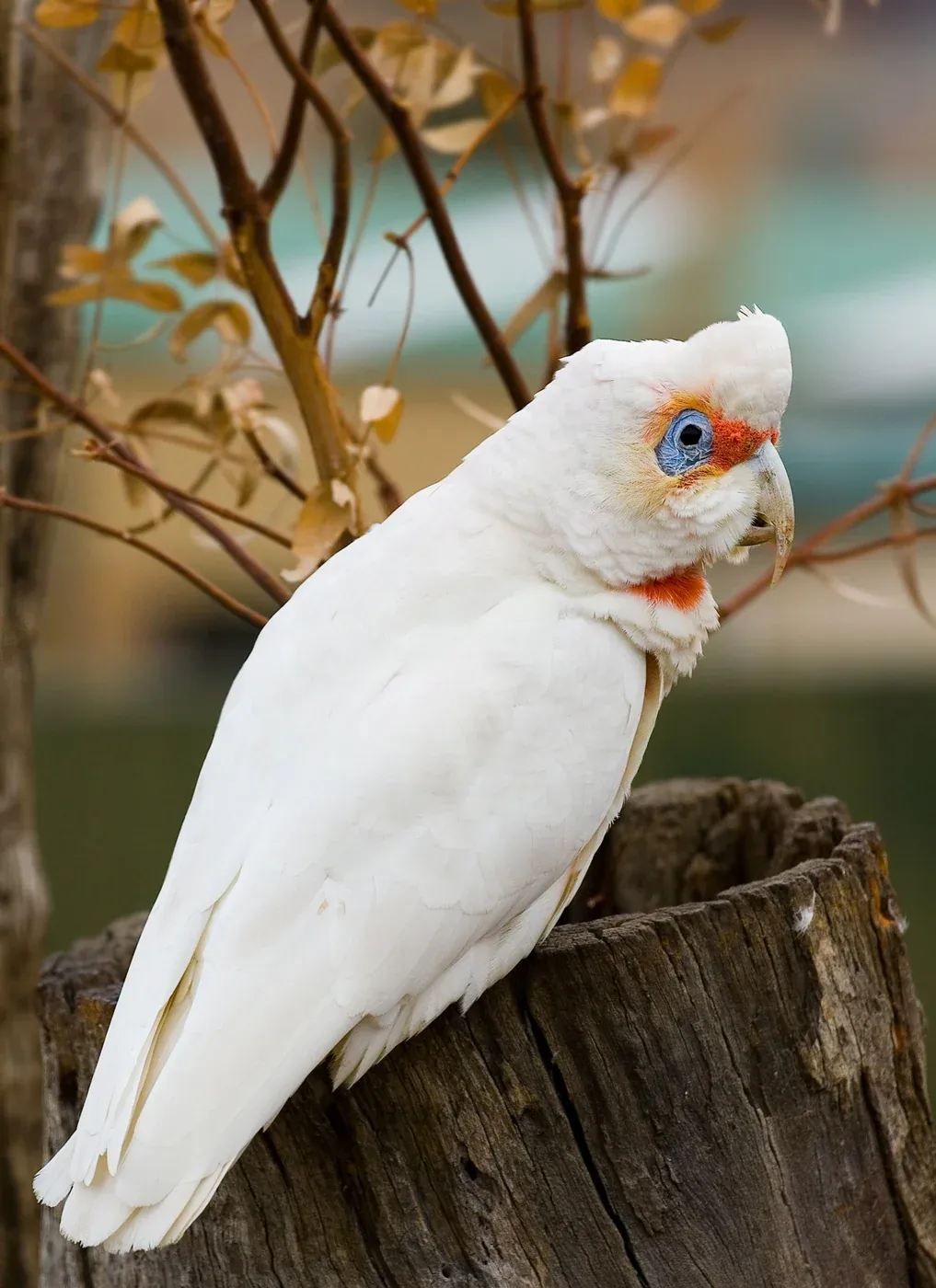
Compare a naturally obtained side view. A much longer upper bill and orange-red crescent across the upper breast point towards Long-billed Corella. A dark bill and yellow crest point towards Sulphur-crested Cockatoo. These are combinations of marks, not an instruction to approach until a bird raises its crest.
Scroll sideways, or focus the table and use arrow keys, to compare all columns.
| Bird | Bill | Additional clue |
|---|---|---|
| Little Corella | Short and pale | Pink lores; bare blue eye patch |
| Long-billed Corella | Distinctly elongated upper bill | Red-orange crescent on upper breast |
| Sulphur-crested Cockatoo | Dark grey-black | Yellow crest, sometimes folded |

Sources: Australian Museum: Little Corella · Australian Museum: Long-billed Corella · South Australian Department for Environment and Water: Little corellas
Adults, youngsters and regional alternatives
Male and female Little Corellas have similar external plumage. Young birds resemble adults too. Apparent smallness, a pinker face or a hidden crest is not enough to assign a photographed bird an age or sex. Separate what you can see from what remains unknown.
Little Corellas are widespread but their range is not an uninterrupted blanket. In south-west Western Australia, Western Corella is an additional possibility, not another name for the south-eastern Long-billed Corella. The WA Museum’s regional comparison explains why a two-species eastern checklist is insufficient there.
Sources: Australian Museum: Little Corella · Victorian Government: Corella Strategy 2022–2032 · Western Australian Museum: Corellas
Why a flock gathers on an oval
Grass seeds and grain are important foods, with some bulbs and fruit also taken. Flocks often feed on the ground and need regular access to water. A grassed oval, seeding verge and nearby trees may supply different resources within the same daily route.
Large gatherings can be noisy and playful. SA guidance describes hanging, swinging and wrestling behaviour; it should not be treated as proof that every bird in a flock is young or captive. Victoria’s strategy also notes that conspicuous post-breeding groups can look like a sudden population increase even when they reflect the seasonal flocking cycle.
Sources: Australian Museum: Little Corella · South Australian Department for Environment and Water: Little corellas · Victorian Government: Corella Strategy 2022–2032
Hollows, rain and family care
Breeding is associated with suitable conditions, including sustained rain, rather than a single national spring timetable. A pair uses a suitable hollow, and both adults incubate and care for chicks. Several pairs may nest in the same tree without every white bird there being the same species.
Feeding grass and nesting trees are not interchangeable habitat. Retaining a useful mature hollow cannot be replaced instantly by planting a seedling. Keep clear of nesting trees, and get qualified advice about any tree hazard. A young parrot on the ground warrants prompt licensed advice; hollow-nesting youngsters do not fit a universal leave-every-fledgling rule.
Sources: Australian Museum: Little Corella · WIRES: Helping chicks
Watch the flock without making it dependent
Record broad region, bill proportions, facial marks and where the birds feed or roost. A written description of the noise is supporting evidence, while a clear bill-and-face comparison is more useful for distinguishing corellas. Do not use loud call playback to move or attract a flock.
Do not provide bread, seed mixes or other handouts to create a closer view. If noise or property damage is a problem, seek current local wildlife advice rather than applying another state’s legal status or experimenting with traps and frightening devices. Injury, entanglement and dependent-young questions belong with a licensed rescuer or vet.
Sources: WIRES: Let nature feed itself · South Australian Department for Environment and Water: Little corellas · WIRES: Helping chicks