
Find the whole pink-and-grey pattern
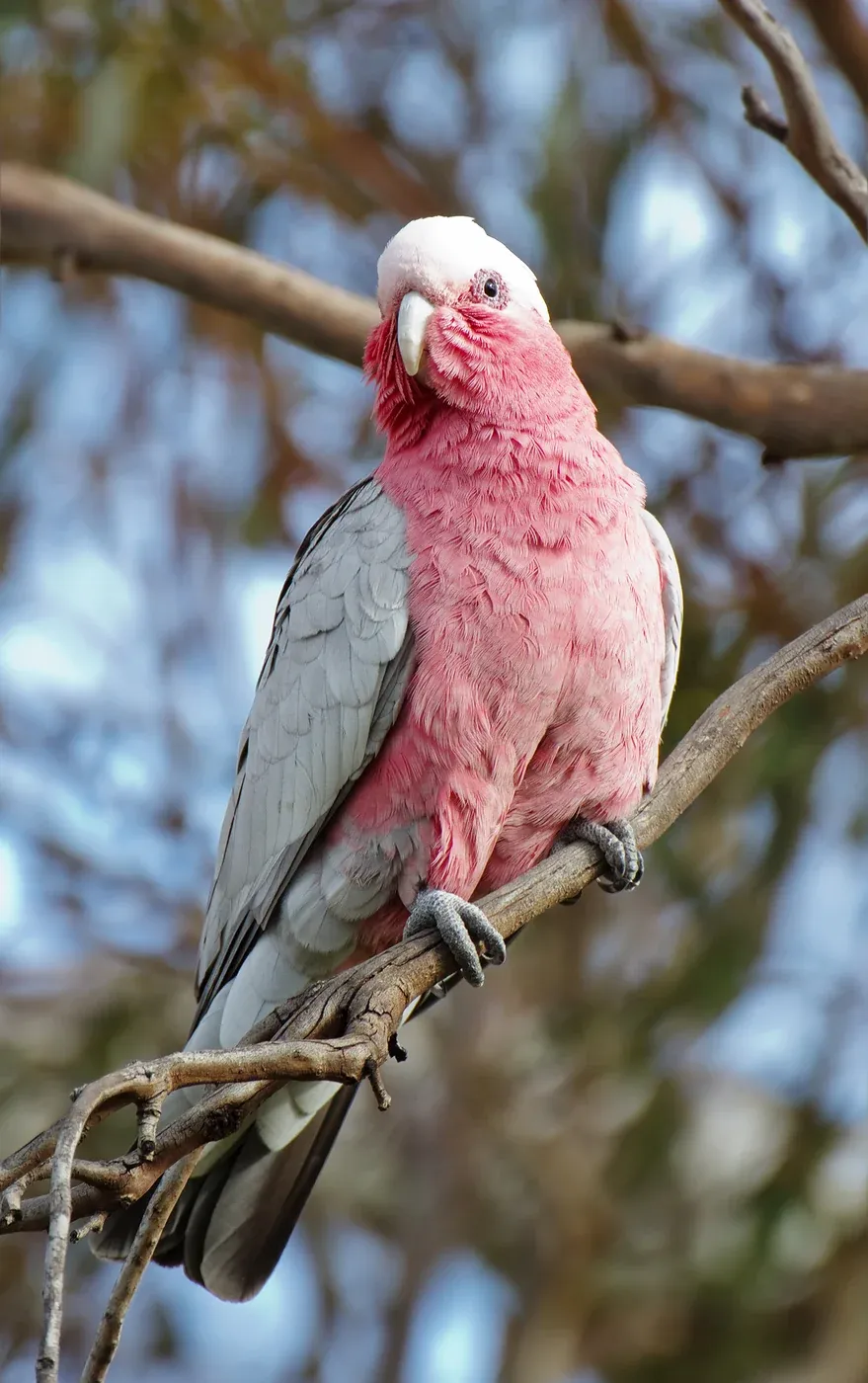
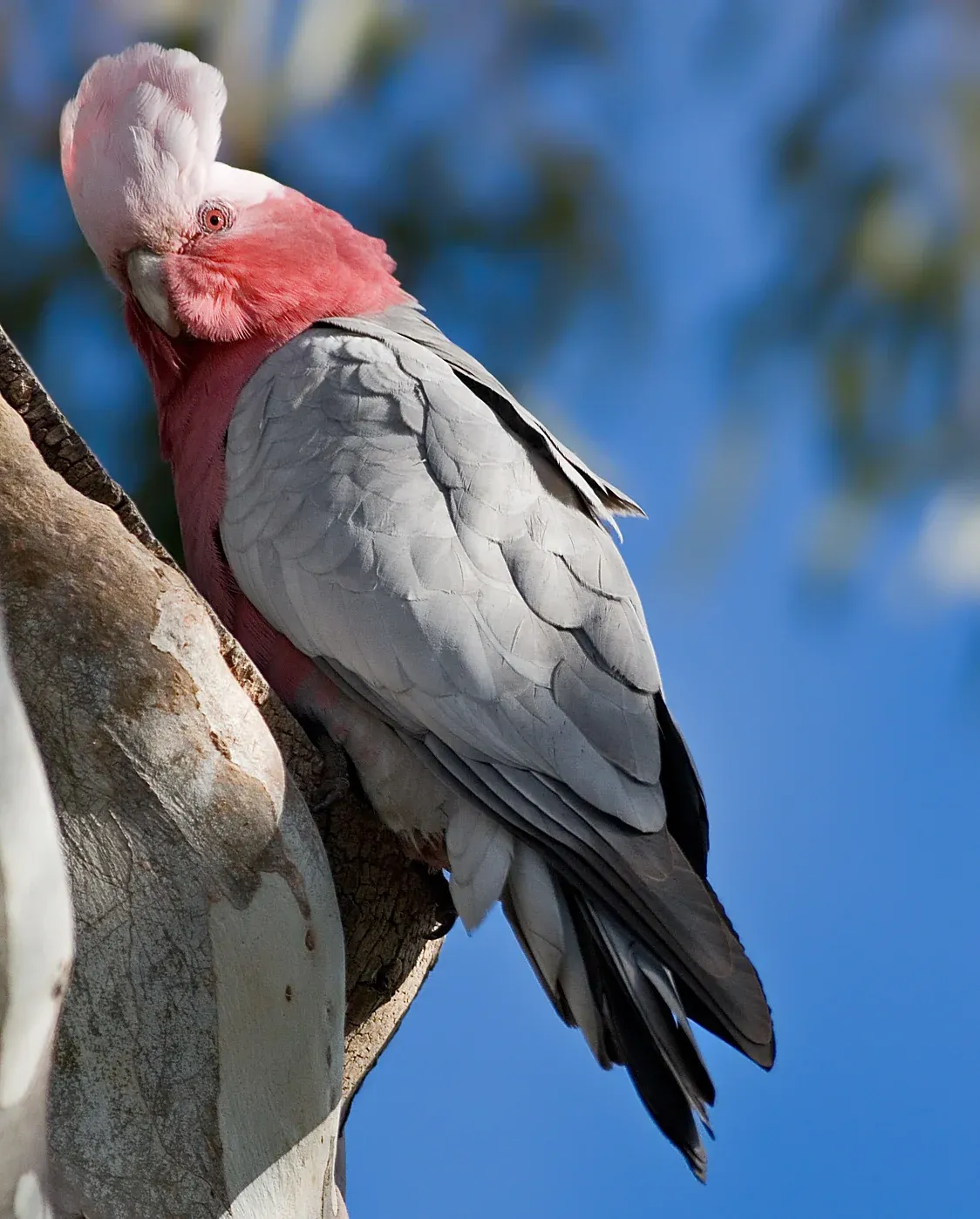
A Galah has rose-pink face and underparts, grey wings and back and a paler crown. Its crest can be folded or raised. Western birds tend to be paler than those farther east, so shade alone should not turn a familiar species into a different one.
White corellas and Sulphur-crested Cockatoos may share feeding grounds, but they do not have the same pink body and grey wings. Follow a single bird from head to tail before choosing a name. In a backlit flock, the colour you cannot see remains unknown; it is not evidence that the bird lacks it.

Sources: Australian Museum: Galah · BirdLife Australia: Galah and call recording
Why dark eyes do not always mean adult male
Adult males generally have dark brown irises; adult females have pinkish to orange-pink irises. Juveniles begin with dark irises too, and young females develop their paler iris progressively. A dark eye alone therefore cannot separate an adult male from every young female.
Young Galahs can show a grey wash over the breast, a less clean crown and a yellowish bill tinge. Consider these features together and leave age or sex open when the view is poor. Reflections, shade and image colour can obscure iris details. Do not approach a bird or make it turn for a closer eye photograph.
Sources: Australian Bird Study Association: Galah, ageing and sexing · Victorian Government: Galah fact sheet (2017)
A flock can contain enduring pairs
Galahs are widespread in Australia and use open timbered country, farmland, parks and other modified landscapes. Feeding birds often take grass and crop seeds from the ground; trees provide shelter and communal roosts. These resources explain why open feeding space and mature trees can both matter.
Large noisy flocks do not erase pair bonds. Partners can remain together across breeding seasons, while many pairs gather at the same food or night roost. A single photograph of several birds cannot show which are partners or establish the size of a local population.
Sources: Australian Museum: Galah · BirdLife Australia: Galah and call recording · Victorian Government: Galah fact sheet (2017)
Listen, then check the source of the noise
The high-pitched screech is familiar, but rhythm and context make a better note than “a loud parrot”. BirdLife provides a Marc Anderson recording. Compare it quietly away from birds and note whether the bird you saw was actually giving the sound.
A noisy flock moving overhead and a pair beside a hollow are different contexts. Avoid playing calls back to birds, walking into roosts or waiting immediately beside a nest entrance. Good observation lets the birds carry on normally rather than provoking a response for identification.
Sources: BirdLife Australia: Galah and call recording · Australian Museum: Galah
Different breeding seasons, shared parental work
The Museum describes a broad February–July season in the north and July–December in the south. These ranges explain why a single national spring timetable is inadequate. Local weather and nesting stage still need observation.
A tree hollow lined with leaves is the usual nest site. Both parents incubate and feed young. Young birds remain dependent beyond the nest stage, so adult-like size or an exposed perch does not establish independence. A young parrot found on the ground needs licensed advice; do not apply a general leave-it rule based only on feathers.
Sources: Australian Museum: Galah · Victorian Government: Galah fact sheet (2017) · WIRES: Helping chicks
Support natural foraging rather than handouts
Retain suitable local vegetation and safe mature habitat, and keep food and waste secure. Bread, scraps and seed mixes do not reproduce a varied natural diet. Watch a feeding flock from enough distance that it does not have to leave its patch.
For a useful record, include broad region, visible breast and wing colours, iris only if clear, and the observed behaviour. If a bird is injured, has been struck or caught by a pet, use a licensed rescue group or vet instead of attempting treatment or handling.
Sources: WIRES: Let nature feed itself · WIRES: Wildlife-friendly gardens · WIRES: Helping chicks