
What makes this a Pacific Black Duck?
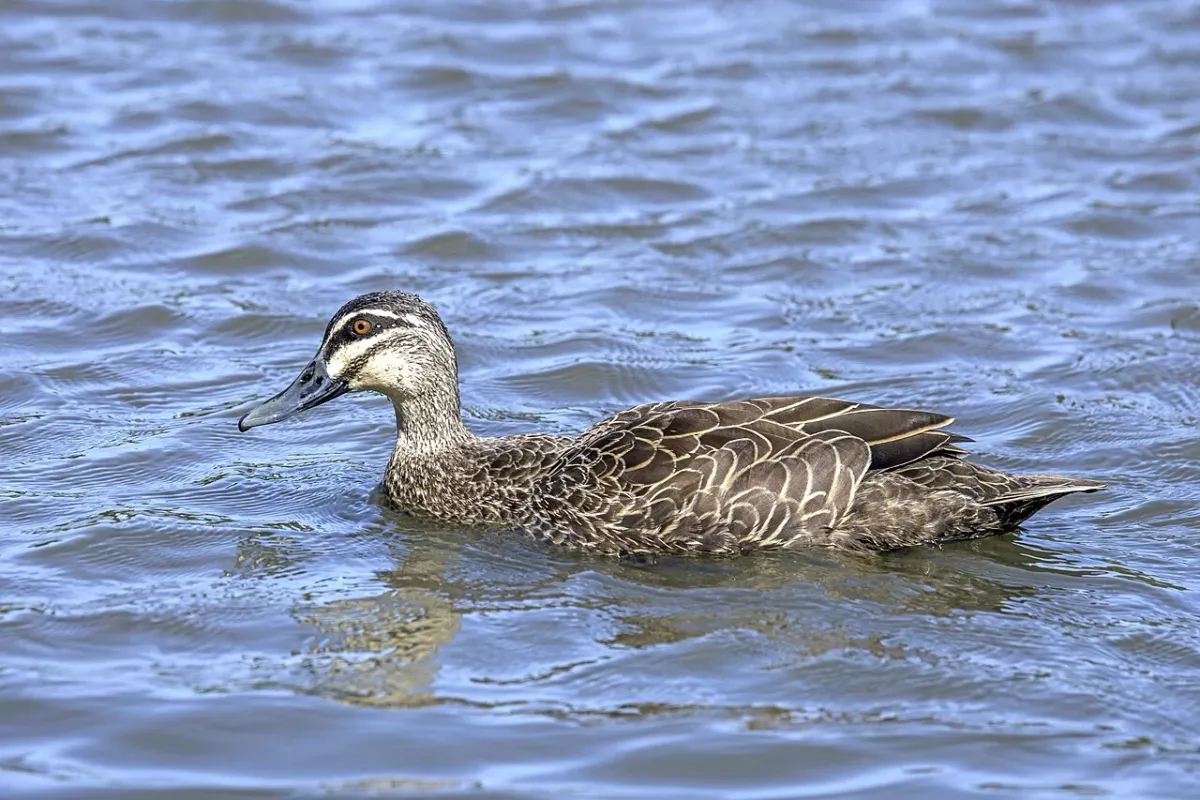
Despite its name, the Pacific Black Duck is largely brown. The dark crown and line through the eye divide a pale face; buff-edged body feathers make a patterned surface. Its folded or open wing can show an iridescent patch, often green or purple as the viewing angle changes.
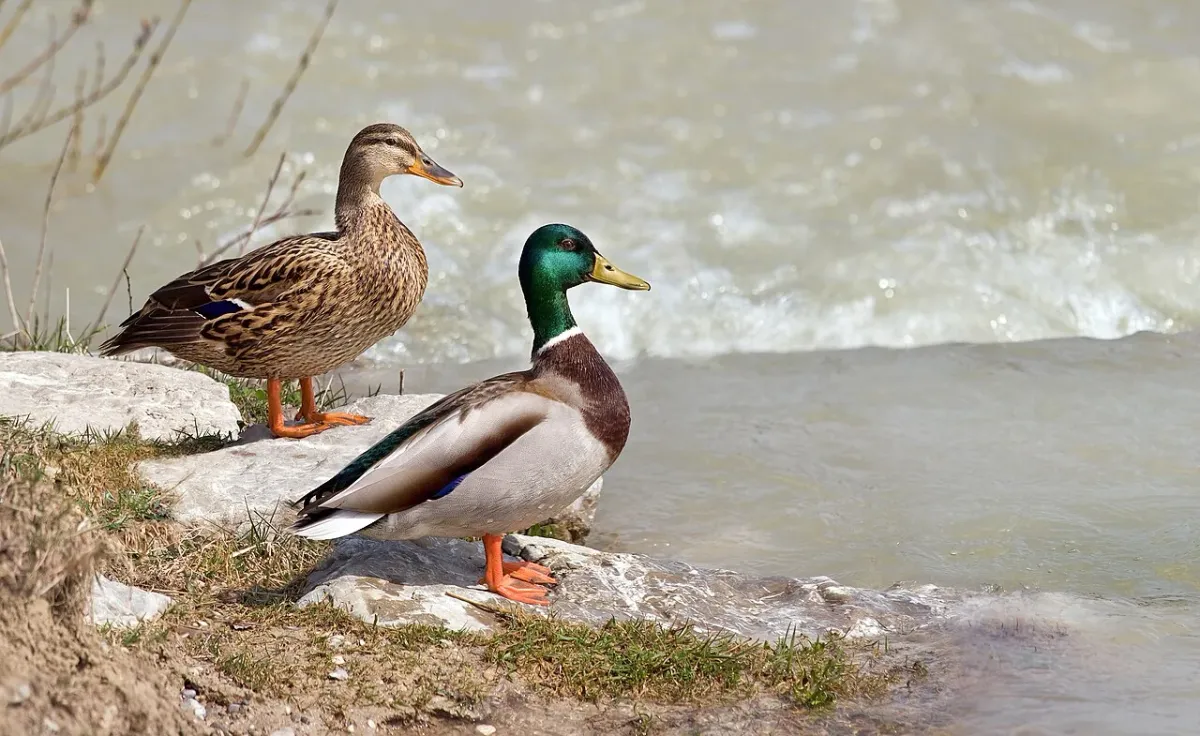
A green-headed Mallard drake is a more obvious contrast, with a pale neck ring and different body pattern. A mottled brown female Mallard is harder. Start with the face, bill, feet and tail together, not the word “brown” or the presence of any shiny wing patch.
Scroll sideways, or focus the table and use arrow keys, to compare all columns.
| Feature | First comparison | Second comparison |
|---|---|---|
| Face | Black duck: bold pale and dark stripes. | Mallard: females are mottled brown; hybrids can resemble black ducks. |
| Feet and tail | Black duck: usually dusky feet; no curled or white tail feathers. | Mallard or hybrid: orange-yellow feet and curled or white tail feathers can be clues. |
| Bright male plumage | Black duck: no green-headed Mallard pattern. | Typical Mallard drake: green head, white collar and chestnut breast. |

Sources: Australian Museum: Pacific Black Duck · Australian Museum: Mallard · WA conservation department: Waterbirds of South-West Wetlands (2001 PDF)
Hybrids make certainty harder
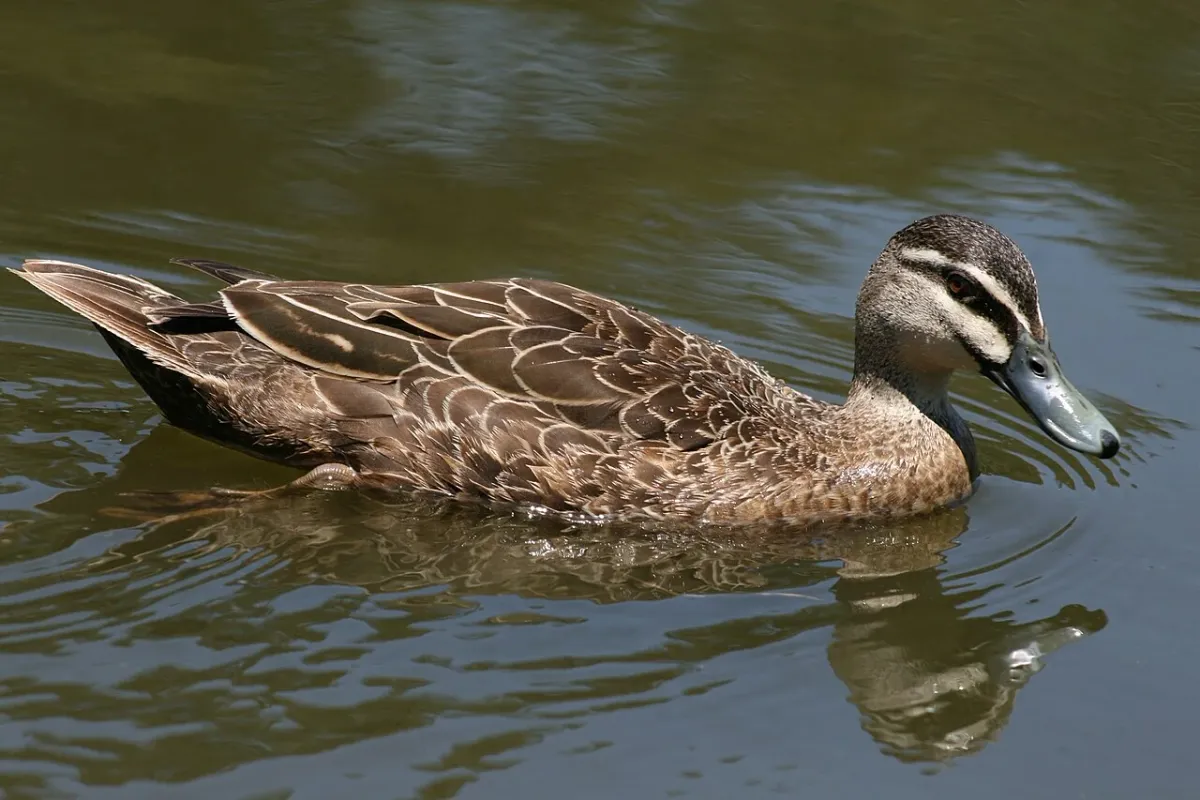
Introduced Mallards interbreed with Pacific Black Ducks. A duck showing a mixture of characters is not necessarily a new native species or a young black duck. ABSA notes orange-yellow feet and curled or white tail feathers as useful Mallard or hybrid clues. A single clue is not a genetic test.
The Sydney photograph here is identified as a hybrid by its photographer. It illustrates how close the overall resemblance can be; it is not independent genetic verification of that individual. If the view does not resolve a bird, record “possible hybrid” with the visible features rather than forcing a pure-species label.

Sources: Australian Museum: Pacific Black Duck · Australian Bird Study Association: Pacific Black Duck age and sex account (PDF) · Australian Museum: Mallard
Age, sex and calls are separate questions
Male and female Pacific Black Ducks look similar in a casual view. The specialist account describes subtler crown, back and wing-feather differences, but that does not make an obscured folded wing a reliable sex test. Do not approach, catch or spread a wing to inspect it.
Female calls usually include the familiar descending quack sequence; males also give softer, hissier notes, grunts or whistles. A well-observed caller can add information. A noisy group cannot tell you which photographed bird made the sound.
Adult-like feathers develop within the first year. A fully feathered bird cannot be assigned an exact age from its brown colour. Downy ducklings and adult-looking young are different stages, and being able to swim does not mean a youngster no longer needs its mother.
Sources: Australian Bird Study Association: Pacific Black Duck age and sex account (PDF) · Parks Australia: Pacific black duck at Booderee · WIRES: Helping chicks · BirdLife Australia: Ethical Birdwatching Guidelines
Dabbling connects the bird to the wetland
Pacific Black Ducks use waters ranging from forest pools to coastal mudflats across much of Australia, avoiding the driest country. They feed on plant material and aquatic invertebrates. Tipping forward with the tail above the surface is dabbling: the bird reaches food with its head and neck below water.
That familiar posture differs from a bird visibly entangled or struggling. Do not test a duck’s health by throwing food or trying to make it fly. Keep fishing line and other loose litter out of the water and enjoy natural feeding from the bank.
Sources: Australian Museum: Pacific Black Duck · Parks Australia: Pacific black duck at Booderee
Breeding dates need a region and conditions
Nests may be in down-lined hollows, grassy cups or reeds. The female incubates. A Western Australian wetland account describes June–October breeding in the south-west, while Canberra’s local observations include dependent young from spring into summer. Water, food and local conditions matter; neither example is a fixed national timetable.
Leave family groups room to reach cover and keep dogs controlled. Do not place young ducklings into water, separate them for a photograph or offer bread. If a youngster is injured, entangled or apparently separated, use the rescue directory for advice rather than applying the care rules for a tree-nesting songbird.
Sources: Parks Australia: Pacific black duck at Booderee · Australian Bird Study Association: Pacific Black Duck age and sex account (PDF) · WA conservation department: Waterbirds of South-West Wetlands (2001 PDF) · Canberra Ornithologists Group: Pacific Black Duck garden observations · WIRES: Helping chicks · BirdLife Australia: Ethical Birdwatching Guidelines · BirdLife Australia: A guide to feeding wild birds in Australia