
Which ibis is in front of you?
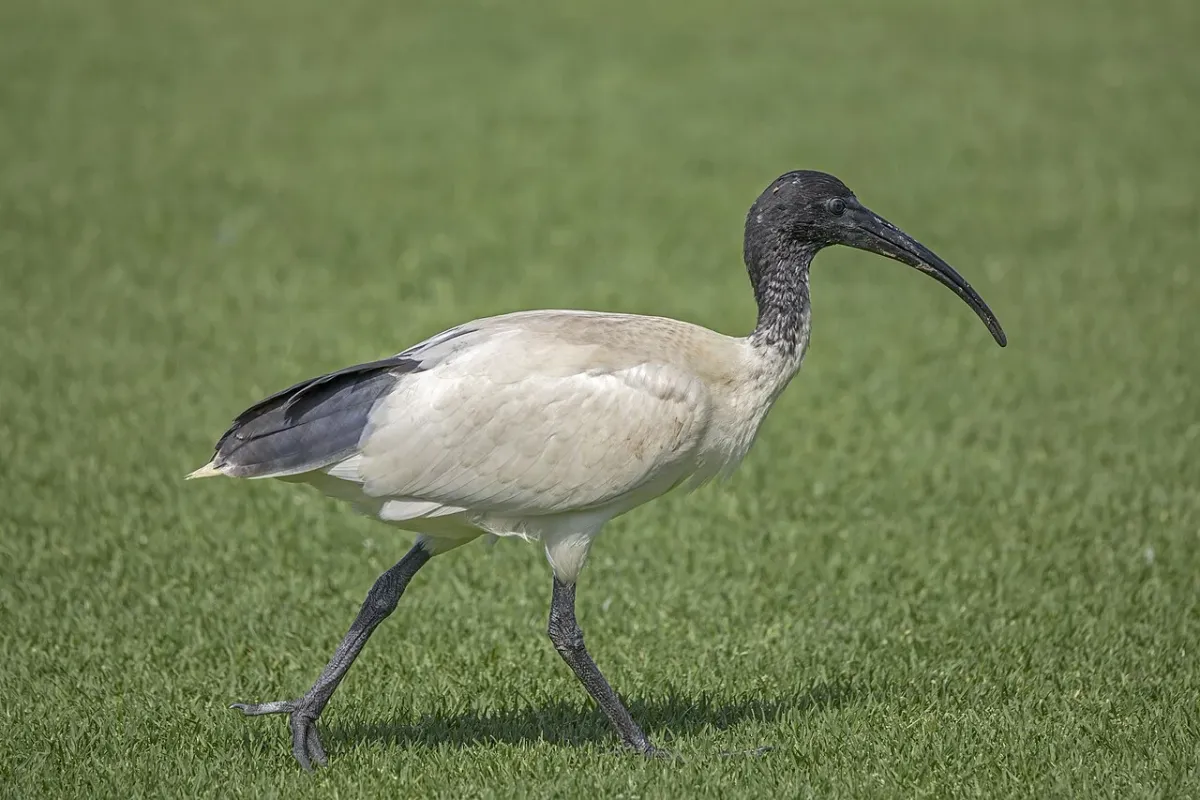
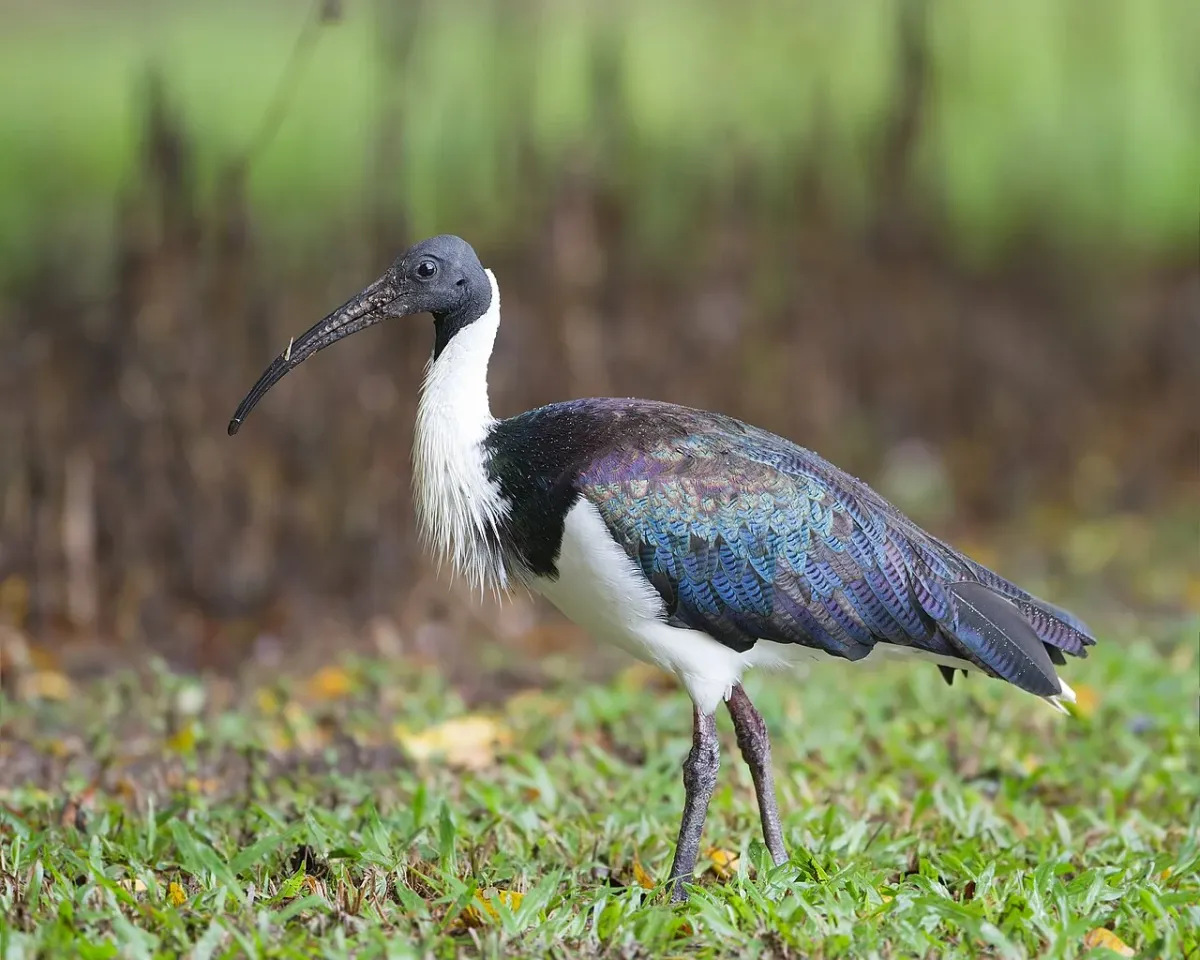
Australian White Ibises have a largely white body with a dark bare head and a long down-curved bill. Straw-necked Ibises have a glossy dark back that can shine blue, green or purple, a white belly and characteristic straw-like neck plumes. The pattern across the back and belly is more useful than the general description “long curved bill”.
Both can occur together. A pale bird and a dark-backed bird in one flock need not be female and male of the same species. Check each bird’s body pattern. Lighting changes iridescence, so a Straw-necked Ibis can look black rather than brightly coloured in shade.
Scroll sideways, or focus the table and use arrow keys, to compare all columns.
| Feature | First comparison | Second comparison |
|---|---|---|
| Back and body | White Ibis: mostly white body. | Straw-necked Ibis: dark iridescent back contrasting with white underparts. |
| Neck | White Ibis: dark bare adult neck, with ornamental plumes at its base. | Straw-necked Ibis: specialised straw-like neck feathers. |
| Interpretation | Neck feathering changes with age. | Do not require a perfect view of every ornament before checking the body. |
| Habitat clue | Wetlands, grassland and urban sites. | Wetlands and open grassland; often feeds on insects. |

Sources: Australian Museum: Australian White Ibis · Australian Government: Ibis, fledgling to flock · WA conservation department: Waterbirds of South-West Wetlands (2001 PDF)
Age and breeding ornaments are not the same as sex
Young Australian White Ibises have dark feathers covering the neck where adults show bare skin. Adults may have cream plumes at the neck base, and exposed skin beneath the wing becomes more strongly coloured during breeding. Missing a breeding feature does not by itself make a bird juvenile.
Female White Ibises tend to be a little smaller with shorter bills, but one photograph seldom supplies a useful same-age comparison or scale. Treat sex as uncertain rather than using dirty plumage, body size or a short-looking bill as a decisive rule.
The “straw” name refers to specialised neck feathers, not to a bill carrying nesting material. An obscured neck cannot provide an age or sex assignment. A view of the dark upperparts may still support the species comparison without settling either of those separate questions.
Sources: Australian Museum: Australian White Ibis · BirdLife Australia: Australian White Ibis, including call recording · WA conservation department: Waterbirds of South-West Wetlands (2001 PDF)
City birds still have a wetland story
White Ibises use wetlands, floodplains and grassland as well as parks and other urban spaces. Their bill probes for invertebrates, including aquatic food. Straw-necked Ibises often forage for grassland insects. Finding either on a lawn does not make it a purely urban bird.
BirdLife describes White Ibises as widespread in northern and eastern Australia, with an expanding western range. Straw-necked Ibises occur across much of the mainland. These broad accounts are context, not proof that an unusual bird cannot appear outside a familiar local patch.
The Australian Government’s ibis account explains why sustained wetland water matters to breeding. Water around a colony can help protect nests and support food while young grow; a rapid fall can disrupt a breeding event. A crowded city picnic area therefore says little about conditions at inland breeding wetlands.
Do not infer a national population increase from birds congregating around bins. The Museum and BirdLife distinguish growing urban concentrations from declines in natural habitat. A local count needs its date, place and method before it can support a wider trend.
Sources: Australian Museum: Australian White Ibis · BirdLife Australia: Australian White Ibis, including call recording · Australian Government: Ibis, fledgling to flock · WA conservation department: Waterbirds of South-West Wetlands (2001 PDF)
Colonies and young at different stages
White Ibises nest in colonies, sometimes alongside Straw-necked Ibises. Newly hatched White Ibis young are helpless in the nest. Their development is unlike the mobile, down-covered lapwing chicks that can walk away soon after hatching.
The government’s Straw-necked Ibis life-cycle account follows nest-bound chicks through walking and wing-exercising stages before independent flight. Being able to walk between nests is not the same as being able to fly or feed independently. Keep visitors outside the colony and avoid flushing adults for photographs.
Breeding opportunities follow water conditions and differ between places and years. Treat a dated colony report as evidence of that event, not a promise that the same wetland will hold breeding birds every spring.
Sources: BirdLife Australia: Australian White Ibis, including call recording · Australian Government: Ibis, fledgling to flock
Calls and a useful observation without handouts
White Ibises make drawn-out croaking sounds. BirdLife’s linked player identifies its recordist and licence. Listen away from the birds. A call is an additional clue, not a replacement for the dark-backed versus white-backed comparison.
For your next record, note back colour, neck feathering, behaviour and broad habitat. Keep food and rubbish secure and leave birds to find natural food. Do not chase a feeding flock or approach a colony to obtain a missing field mark. If a bird is entangled, injured or visibly distressed, seek licensed help instead of trying to release or treat it yourself.
Sources: BirdLife Australia: Australian White Ibis, including call recording · Australian Government: Ibis, fledgling to flock · BirdLife Australia: Ethical Birdwatching Guidelines · BirdLife Australia: Ethical Birdwatching Guidelines