
Why do the face and black collar look different?
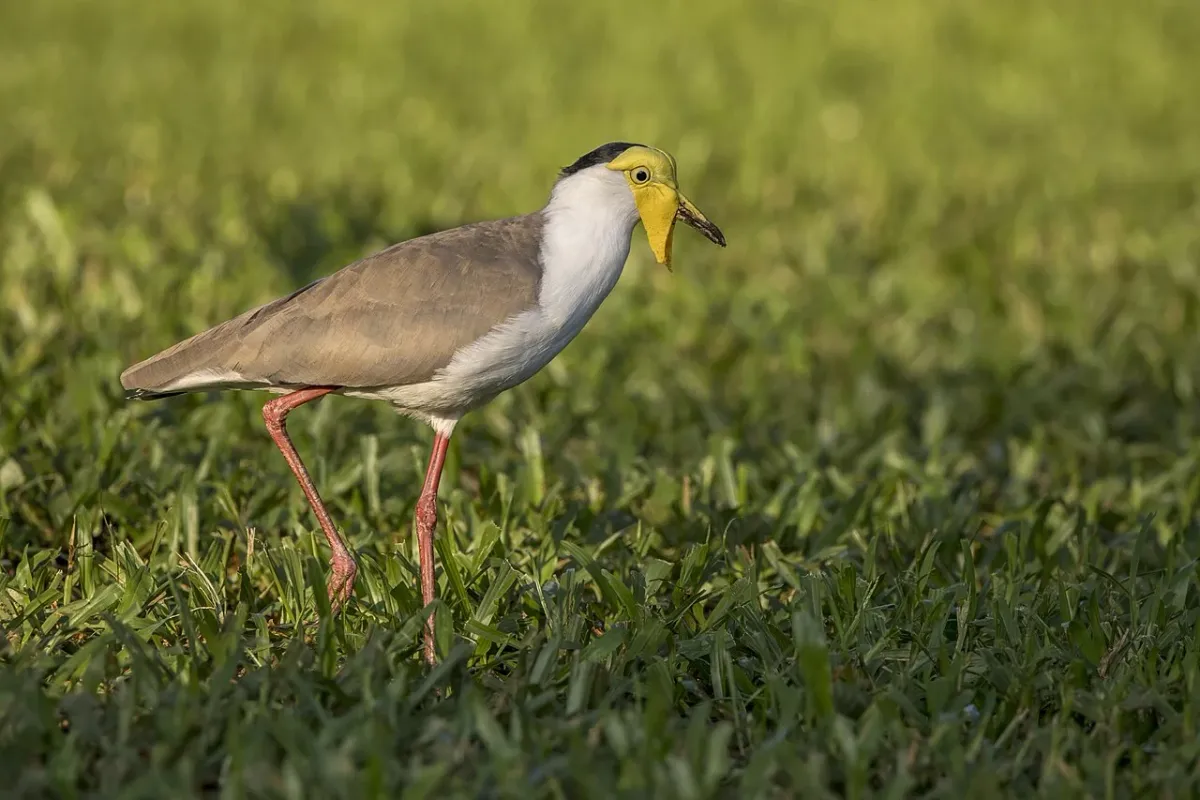
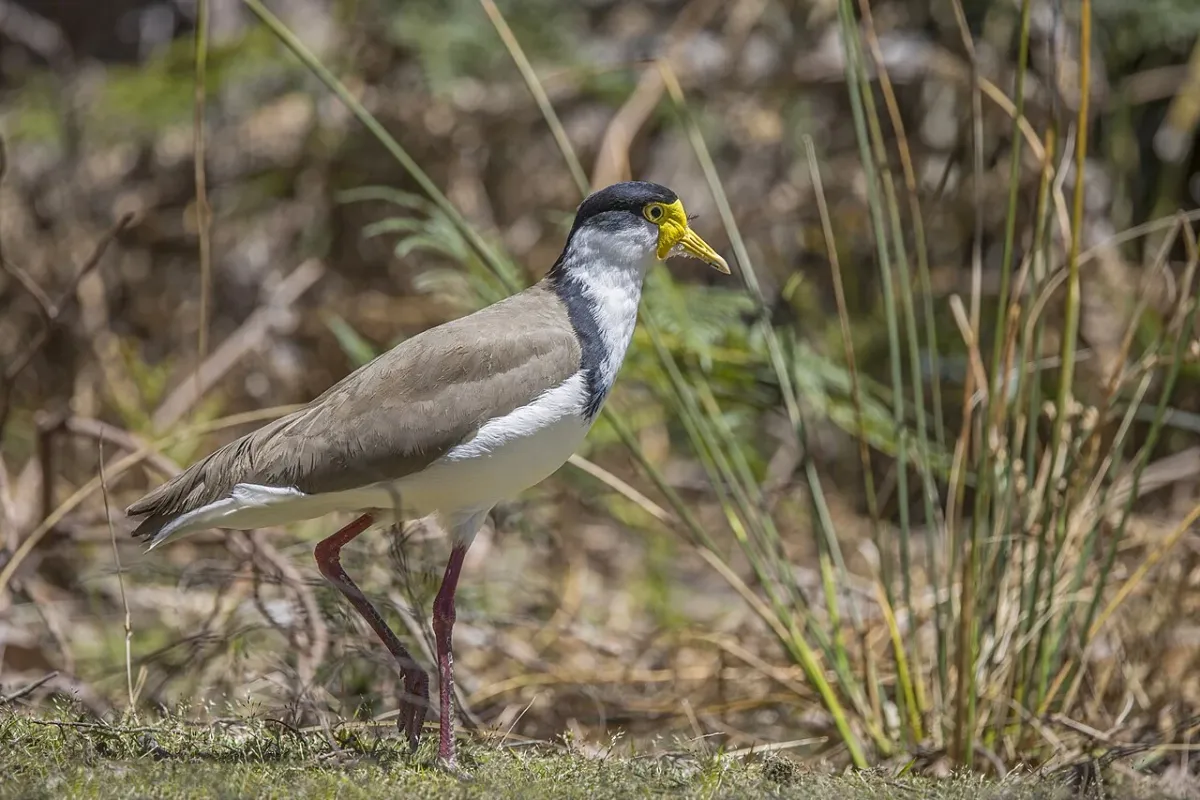
A brown back, white underparts, black crown and yellow facial wattles make a Masked Lapwing distinctive. Compare the neck and wattle before deciding that two different-looking birds are different species.
The northern form has a larger yellow wattle and lacks the southern bird’s partial black collar. The southern form has smaller wattles and black extending down the sides of the breast. A northern and a southern adult can therefore look different without the contrast being male versus female.
Scroll sideways, or focus the table and use arrow keys, to compare all columns.
| Feature | First comparison | Second comparison |
|---|---|---|
| Northern or southern form? | Large wattles with no partial black collar versus smaller wattles with black breast sides. | Use region and several features; a poor face view may be insufficient. |
| Young or adult? | Young have reduced or absent wattles and wing spurs. | Downy chicks differ from later young; small wattles alone do not establish age. |
| Male or female? | The sexes have similar plumage. | Do not use the regional collar difference as a sex rule. |

Sources: Australian Museum: Masked Lapwing · Queensland Government: Masked Lapwing or plover
A chick on the ground is not automatically displaced
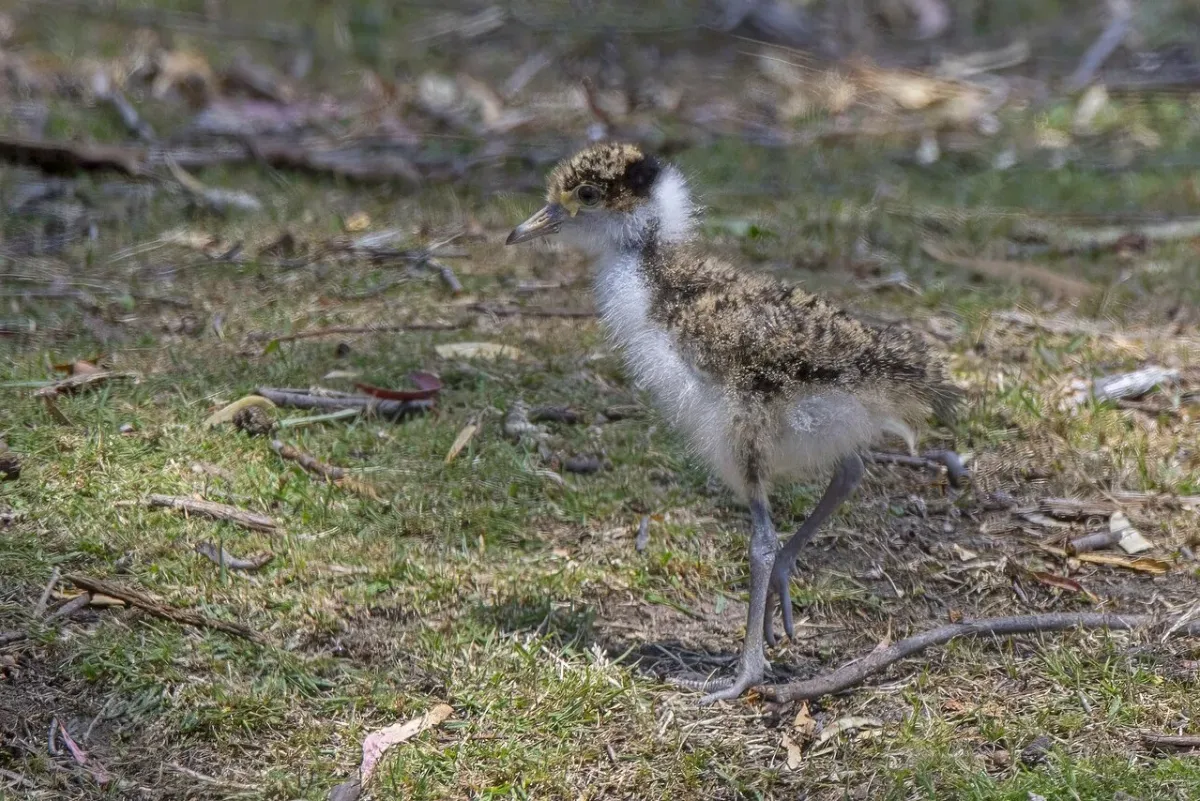
Masked Lapwings nest on the ground. Downy chicks can leave the nest and find food soon after hatching, while adults continue guarding them. That development differs from a featherless songbird nestling; a lapwing family walking on grass does not need to be put into a tree.
Later young may resemble adults more closely but have a darker back and smaller or absent wattles and spurs. The sexes look similar. A distant photograph normally cannot justify a precise sex assignment, even though male spurs tend to be larger.
The photograph shows a downy young bird, not an example of full adult-like juvenile plumage. Keep the stage description attached to what is visible.

Sources: Australian Museum: Masked Lapwing · BirdLife Australia: Masked Lapwing, including call recording · WIRES: Helping chicks
Open ground can be habitat, including a playing field
Lapwings use wetlands, mudflats, grassland and urban open spaces. Their presence on a lawn is not evidence that someone released them. Insects, larvae and earthworms near the surface provide food, so a short-grass feeding place can be useful habitat.
The Museum describes the species as common across northern, central and eastern Australia. Broad range summaries do not replace a local record, and regional forms do not require a national boundary drawn through every sighting. Note the town or broad region with the face and neck pattern.
Sources: Australian Museum: Masked Lapwing · BirdLife Australia: Masked Lapwing, including call recording
Calls and a nesting season that does not follow one date
The repeated loud kek call can reveal a bird before you see it. BirdLife’s official player credits Fred Van Gessel; Queensland’s species page also links a lapwing recording. Listen away from the birds instead of playing alarm calls beside a nest.
Breeding follows suitable conditions. Both adults share the nest scrape, incubation and protection of young. The Queensland page describes a local spring pattern, while the Museum account allows breeding at any time when conditions suit. Treat those as different scopes, not a single fixed calendar for all Australia.
Sources: BirdLife Australia: Masked Lapwing, including call recording · Queensland Government: Masked Lapwing or plover · BirdLife Australia: Ethical Birdwatching Guidelines
Take a wider route; do not investigate the nest
Adults may dive at an intruder or perform a distraction display that resembles a damaged wing. Move away and give the family room rather than approaching to test whether the display is real. Keep children and dogs clear, use an alternative path and follow local warning signs.
A known collision, entanglement or continuing abnormal movement still needs professional advice. Knowing that distraction displays exist cannot establish that every limping or wing-drooping bird is healthy. Contact licensed help if concerned and describe the circumstances from a safe distance.
For a useful observation, record broad location, collar and wattle appearance, whether birds are feeding or guarding, and any naturally visible young. Leave the exact nest position out of public posts.
Sources: Australian Museum: Masked Lapwing · BirdLife Australia: Masked Lapwing, including call recording · Queensland Government: Masked Lapwing or plover · BirdLife Australia: Ethical Birdwatching Guidelines