
Miner or myna? Start below the black head
A yellow bill, yellow legs and bare yellow skin beside the eye fit both birds. Those shared features explain the confusion but do not settle it. The native Noisy Miner belongs to the honeyeaters. The Common Myna is an introduced member of the starling family; similar names do not mean close relatives.
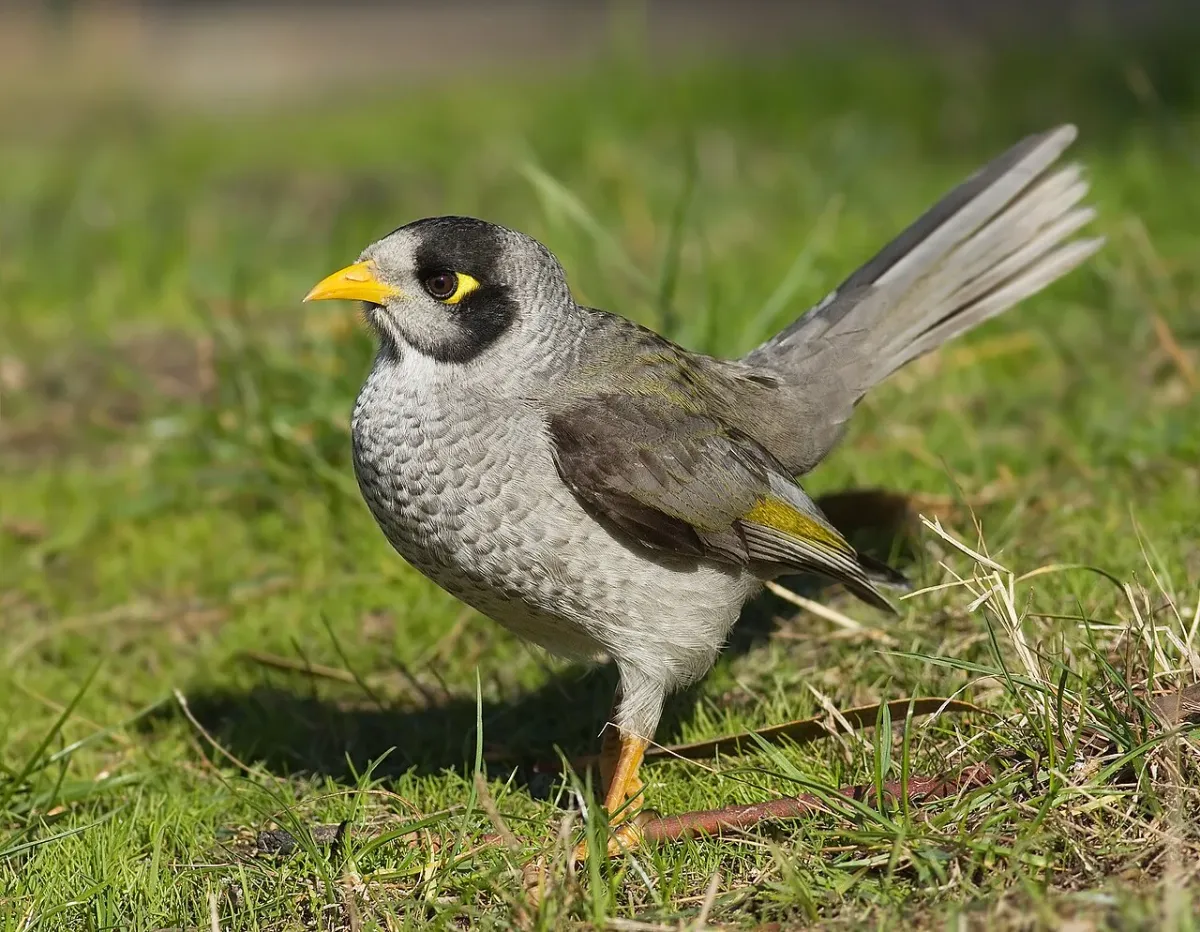
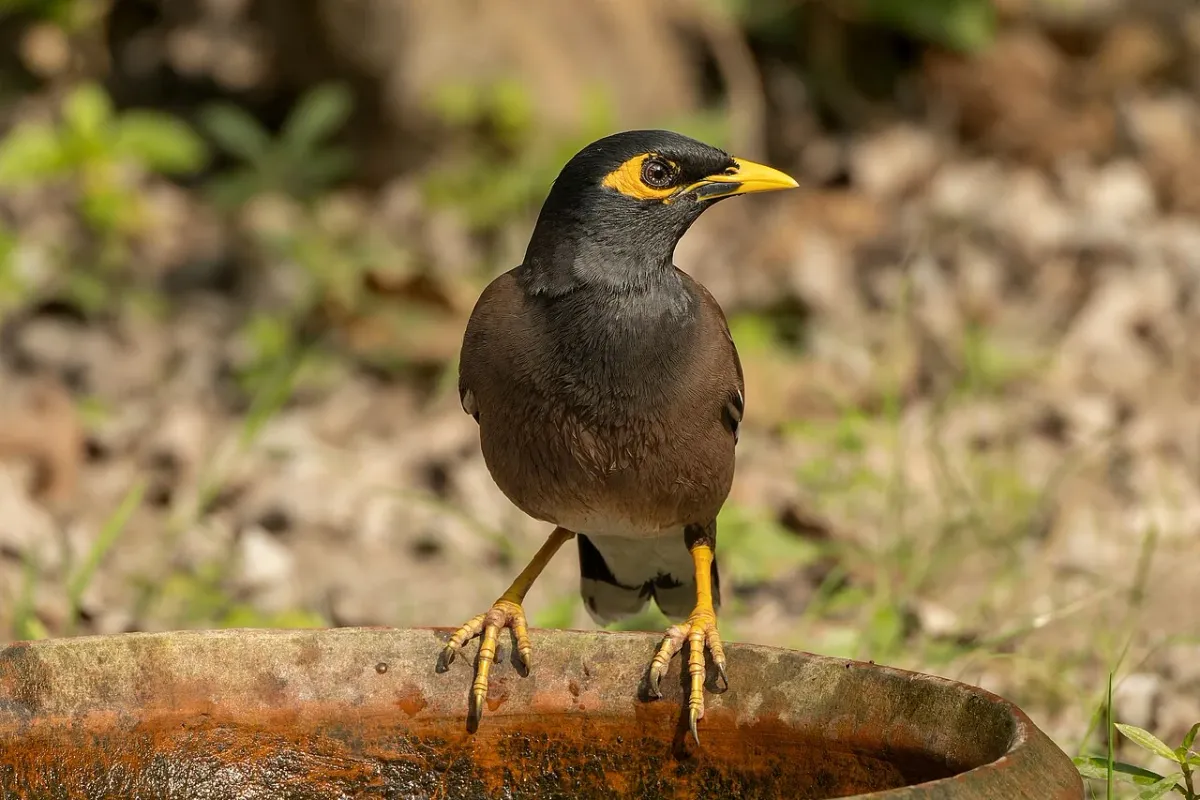
Check the body in ordinary light: a Noisy Miner is mostly grey, while a Common Myna is brown below its black head. A flying myna shows conspicuous white wing patches. If a shaded photograph conceals the body, keep the identification open rather than using noise or boldness as the deciding feature.
Scroll sideways, or focus the table and use arrow keys, to compare all columns.
| Feature | First comparison | Second comparison |
|---|---|---|
| Body | Miner: grey, with a black crown and cheeks. | Myna: brown body below a black head. |
| Wing in flight | Miner: no equivalent large white myna patch. | Myna: conspicuous white wing patch. |
| Family and origin | Miner: native Australian honeyeater. | Myna: introduced starling-family bird. |

Sources: Australian Museum: Noisy Miner · Australian Museum: Common Myna · BirdLife Australia: Myna and Miner comparison and transcript
Do not turn a young bird into another species
Noisy Miner age and sex are separate questions. The Australian Bird Study Association describes young birds with a browner cast above, a brown-tipped upper bill and duller bare skin near the eye. These are a group of clues, not permission to judge age from one yellow patch under changing light.
Male and female Noisy Miners do not have a reliable contrasting plumage pattern. Their size ranges overlap substantially. A large or particularly assertive bird is not thereby male, and a browner immature bird is not thereby female. Record age or sex as unknown when the necessary features are missing.
Common Mynas need their own age rules. ABSA describes juveniles with less bare yellow head skin and without the adult’s black feathers; adult-like plumage arrives within months. An adult-looking myna therefore cannot be given an exact age from one photograph. Male and female mynas do not offer a reliable contrasting size or plumage rule in that account.
Sources: Australian Bird Study Association: Noisy Miner age and sex account (PDF) · Australian Bird Study Association: Common Myna age and sex account (PDF)
Where they live and why they gather
Noisy Miners occupy open woodland, forest edges, parks and gardens across eastern and south-eastern Australia, including Tasmania. Common Mynas are strongly associated with settlements in eastern Australia and may gather at large communal roosts. They can occur in the same neighbourhood; a suburban location does not separate them.
A Noisy Miner colony uses nectar, fruit and insects and may drive other birds away. Common Mynas exploit a wide range of food and compete for nesting cavities. Neither aggressive behaviour nor a bird eating on a lawn proves which species it is. Keep the visible body and wing comparison at the centre of the record.
Sources: Australian Museum: Noisy Miner · Australian Museum: Common Myna · BirdLife Australia: Noisy Miner, including call recording · BirdLife Australia: Common Myna, including call recording
Listen for piping versus varied chatter
Noisy Miners give repeated piping and alarm notes. Common Mynas have a varied mixture of whistles, chatter and harsher rolling sounds. BirdLife’s linked recordings let you compare these patterns with a known source rather than matching the word “noisy”.
Listen later or through headphones away from birds. Do not play calls to draw a bird out. A recording containing several species is a prompt to watch which bird vocalises, not evidence that every sound comes from the nearest visible bird.
Sources: BirdLife Australia: Myna and Miner comparison and transcript · BirdLife Australia: Noisy Miner, including call recording · BirdLife Australia: Common Myna, including call recording · BirdLife Australia: Ethical Birdwatching Guidelines
Nests, helpers and a useful next observation
Noisy Miners breed cooperatively: the female builds the nest and incubates, while parents and additional helpers feed young. Common Mynas use hollows and building cavities. Several adults near one miner nest need not mean several separate breeding pairs, and a bird entering a roof is not automatically a myna.
For a useful record, note the broad region, grey or brown body, wing pattern if naturally visible, call and behaviour. Leave nests and roof access alone. If a bird is injured or a dependent youngster may need help, use the rescue directory and obtain licensed advice; do not handle or feed it on the basis of an identification.
Sources: BirdLife Australia: Noisy Miner, including call recording · BirdLife Australia: Common Myna, including call recording · BirdLife Australia: Ethical Birdwatching Guidelines