Christmas can affect Australian wildlife through the things people do to celebrate: lighting gardens, gathering outdoors, setting off fireworks, travelling and leaving food or rubbish behind. The holiday also falls during a season when some coastal birds are raising chicks, migratory shorebirds are using Australian feeding grounds and hot weather can put animals under pressure.
Those are different kinds of impact. Christmas lights are an addition we choose to make. Summer heat is a seasonal condition that a celebration may coincide with. Keeping that distinction clear helps us choose changes that actually address the problem.
There is useful research on bird sleep, fireworks, beach disturbance and swallowed litter. It does not supply a single Australian Christmas wildlife death toll. It can, however, help identify the places and activities where a small change makes sense.
Christmas changes the night as well as the garden
A decorated tree may also be a sleeping place or a route through a garden. For wildlife, light is more than something that makes objects visible: natural light and darkness help regulate activity, and artificial lighting can alter feeding opportunities, movement and exposure to predators.
Australian Government guidance recommends preserving darkness wherever possible, then controlling the direction, brightness, duration and colour of necessary light. A dark part of the garden is useful habitat, rather than an unfinished part of a display.
The question is not simply whether a string of lights uses little electricity. An LED or solar-powered decoration still produces light. Its ecological effect depends on what reaches nearby habitat and when, not its power bill.
What the Australian magpie sleep experiment found
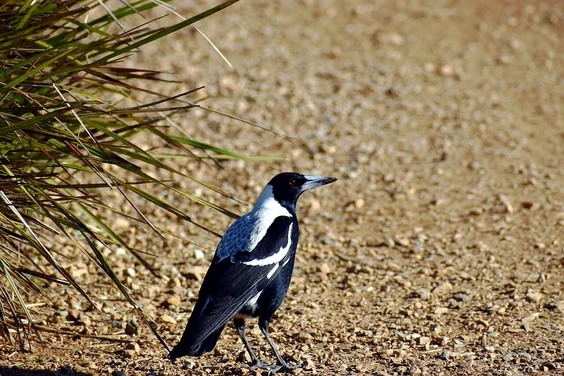
In a 2020 study, researchers recorded brain activity to examine sleep in captive Australian Magpies. Usable records came from eight adult birds. The experimental lights were on for the first four hours of the night, followed by darkness.
Both white and amber light disrupted sleep. Amber had less effect on the magpies, but did not remove the disturbance. The researchers also studied pigeons, in which changing from white to amber did not produce the same benefit. That is a reason to resist a universal claim that one colour is harmless to birds.
These were controlled experiments, not a trial of suburban Christmas displays. Captive birds could not move to a different roost. The results show that artificial light can change sleep physiology; they do not tell us how many free-living magpies are harmed by a particular set of fairy lights.
Making a smaller light footprint
Keep a display near the house rather than extending it into trees and adjoining bushland. Aim it away from foliage and roosts, reduce brightness and use a timer so it does not run through the night. Warm or amber light can be one improvement, alongside those other changes.
Leave a genuinely dark refuge. Walk outside after the display is on and check what it illuminates beyond the intended decoration. A lamp aimed towards the house may still spill through a gap into habitat behind it. Our darker-garden guide explains how to check direction and timing.
Fraser Coast Regional Council’s Christmas guidance highlights the overlap with local turtle nesting and hatching. Australian Government guidance explains that artificial light can deter nesting females and misdirect hatchlings as they try to reach the sea. Beachfront displays need particular care. Follow local turtle-protection advice and keep light off the sand, including warm-coloured light.
The same council recommends keeping decorations away from wildlife movement routes and nesting areas. Secure loose material and avoid draping it where animals climb. A decoration is easier to reposition before wildlife starts using the space around it.
How fireworks disturb birds
Fireworks belong in this discussion because the festive season includes public celebrations as well as Christmas Day. The City of Sydney identifies Christmas tree lighting and New Year’s Eve among local fireworks occasions. The timing and scale of a particular event still need checking with its organiser.
Australian field observations show that fireworks can displace birds. A Queensland Parks and Wildlife Service test at Manly Harbour in August 2020 recorded birds taking flight at a monitored site about two kilometres from the display. That was one test in Moreton Bay. It did not measure Sydney Harbour deaths.
Disturbance, injury and mortality are different outcomes. Taking flight shows a response; establishing whether birds subsequently die needs additional evidence. A display’s effects also depend on the wildlife present, its habitat and the circumstances of the event.
For a household celebration, an event without explosive displays avoids introducing that particular disturbance. Leave nearby roosting wildlife quiet rather than approaching to watch its reaction. Our Sydney fireworks and animals article examines the local evidence, overseas mortality reports and precautions for dogs and cats.
If wildlife appears distressed afterwards, give it space and keep pets away. Do not chase a bird to see whether it can fly. Seek licensed wildlife help if an animal appears injured or unable to move normally.
A busy beach can be a nursery or a feeding ground
Holiday beach use overlaps the breeding season of several Australian shorebirds. Hooded Plovers, for example, lay camouflaged eggs on the ground; small chicks can be difficult to distinguish from sand and debris. A beach that looks empty can contain a nest or a family keeping out of sight.
Repeated disturbance has costs beyond a person or dog physically reaching a nest. Parents may move away, and chicks may stop feeding or hide. BirdLife Australia’s advice is to keep clear of nesting areas, heed signs and give families room to move. Watching through binoculars is more useful than approaching for a closer photograph.
An Australian study makes the feeding cost more concrete. Weston and Elgar observed nine Hooded Plover broods in southern Victoria, comparing each brood on a busier weekend or public-holiday day and a quieter day, often a weekday. The comparison used 18 daylight observation sessions of 10–12 hours each. Chicks spent less time foraging when disturbance was greater, and encounters commonly interrupted feeding.
The study did not show that every interruption killed a chick. Some consequences, including effects on brooding, were less clear, and the researchers did not find that disturbance compromised adult defence in their observations. The supported lesson is that a chick successfully hiding from people may still be losing feeding time. No dramatic injury needs to be visible for a visit to have an effect.
Why staying outside a nest fence may not be enough
A fence protects a known nesting area, not necessarily every place a mobile chick needs to feed. NSW’s Share the Shore guidance recommends using permitted wet-sand routes and keeping away from birds. That is not permission to cross a closure or push a feeding flock ahead of you along the waterline.
Choose another route if birds repeatedly move away. Take dogs only where allowed, follow leash rules and keep them well away from wildlife even when on a lead. The specific restrictions at that beach take priority over general holiday advice.
Other shorebirds are here for a different reason. Migrants that breed in northern regions, including Siberia and Alaska, use Australian wetlands and coasts as non-breeding feeding grounds. They may be resting and feeding rather than guarding Australian nests. A flock on an estuary still needs space, even when there is no nesting sign.
Our guides to beach-nesting birds and migratory shorebirds explain those different needs.
Balloons and loose decorations can outlast the party
Swallowed litter is a different hazard from disturbance. It is worth separating what has been measured from the general precaution of keeping decorations out of habitat.
A 2019 study examined 1,733 dead seabirds from 51 species in Australia and New Zealand. These were albatrosses, petrels, shearwaters and their relatives, collected through sources including beach strandings and fisheries. They were not a random sample of healthy birds, and the study was not about Christmas specifically.
The researchers identified gut obstruction as the main mechanism in deaths attributed to ingested debris. Soft material could lodge where it blocked the passage of food. Balloons had a much higher estimated risk per swallowed item than hard plastic. The reported comparison was about 32 times higher, based on five known or probable balloon-related deaths and 32 swallowed balloon items, including fragments, in the sample.
That small fatality sample matters. The finding does not mean every bird encountering a balloon has a 32-fold risk of dying, or that every bird examined died from plastic. It does support treating balloon fragments as a serious ingestion hazard rather than harmless scraps.
A practical holiday choice is to avoid balloon releases and choose reusable decorations that can be secured and completely collected. At an outdoor gathering, count what you put out and check the ground before leaving, including beneath tables and around bins. Apply that clean-up approach to ribbon, tinsel and small broken decorations too; the seabird study does not provide a separate risk estimate for each of those materials.
Fishing equipment is another source of persistent litter around holiday beaches and waterways. Take home line and tackle, including fragments found during a final check. See fishing line and waterbirds for the entanglement risks and the appropriate response to an affected bird.
Christmas leftovers are not a wildlife meal plan
A magpie or kookaburra coming close to a barbecue can make sharing food seem kind. A bird accepting something, however, does not establish that it is suitable as a substantial part of its diet.
BirdLife Australia’s feeding guidance discourages offering unsuitable human food and highlights nutritional problems with mince. Plain muscle meat lacks the balance of calcium and other nutrients birds obtain from their natural diet. That is particularly important for growing young. Bread and other processed leftovers are also poor substitutes for appropriate natural food.
This is a dietary argument, not a claim that one accidental crumb inevitably poisons a bird. The useful Christmas decision is to keep the meal for people, remove scraps and help wildlife through habitat rather than a continuing supply of leftovers.
The Queensland Government also warns that feeding can concentrate animals and contribute to disease, aggression and nutritional problems. Native plants that provide appropriate food and shelter offer a different way to support a garden’s visitors. Our bird-feeding guide looks at that choice in more detail.
Around a picnic or campsite, unintentional feeding matters too. NSW National Parks and Wildlife Service recommends securing food and scraps and using bins with fitted lids, or taking rubbish away. A bag beside an overflowing bin is still accessible food and litter.
Heat and holiday driving need their own precautions
Heatwaves are not caused by Christmas, and their timing varies across Australia. They can nevertheless coincide with outdoor celebrations or the days a household is away.
WIRES recommends shallow, stable containers of plain water in shade, with stones or a sturdy escape aid for smaller animals. Change the water and keep containers clean. If nobody will maintain a water source while you are away, arrange that care rather than assuming putting out a large bowl finishes the job.
Leave heat-affected wildlife quiet and do not pour water into an animal’s mouth. An animal that is collapsed, disoriented or clearly injured needs professional advice. Never touch a bat or flying-fox. Our hot-weather guide explains signs to watch for and when to call for help.
Driving adds another exposure during a holiday trip. National Parks advises particular care around dawn and dusk and watching road verges. Animals feeding beside roads can include birds attracted to roadkill as well as larger mammals. Plan travel with visibility in mind and slow down when conditions or warning signs require it.
These precautions do not depend on claiming a measured Christmas surge in roadkill. If you encounter an injured animal, first ensure you can stop safely, then contact a licensed rescuer or vet. Do not put yourself or other road users at risk by rushing onto the road.
Make a plan for the place you will celebrate
Choose the most relevant change before the holiday: check where your garden lights spill, read the rules for the beach you will visit, arrange a thorough picnic clean-up or plan a drive with fewer hours around dusk. A beachfront holiday house, an urban garden and a bush campsite have different wildlife neighbours.
Save the rescue contacts directory for your destination before travelling. If you find an animal in trouble, use our injured-wildlife guidance and contact licensed help promptly. Oz Wildlife provides information; the contact form is not an emergency rescue service.