Recognise and understand
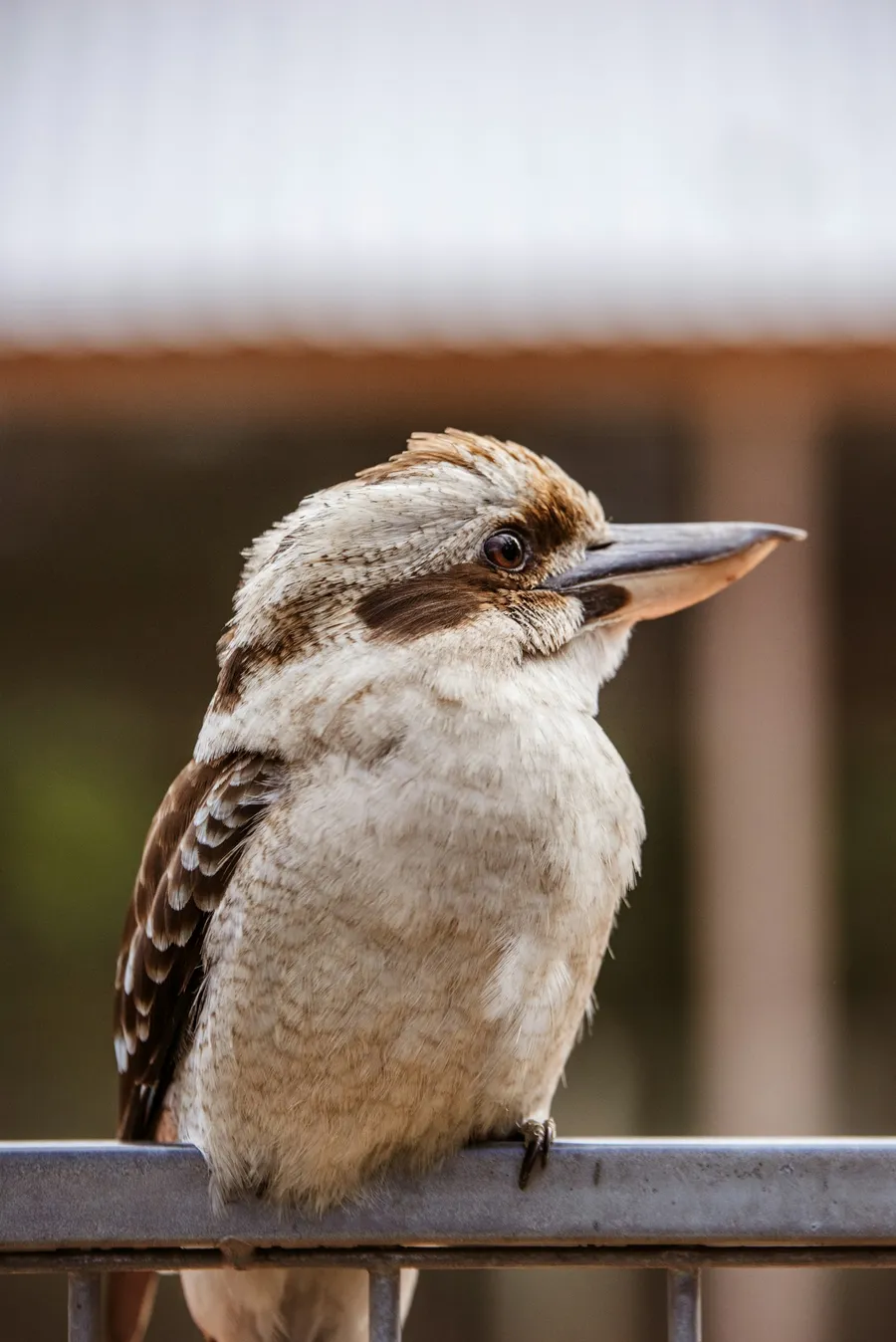
The Laughing Kookaburra is a large kingfisher with a pale underside, brown upperparts and a dark stripe through the eye. Its name comes from the rolling, laughter-like call. That sound helps advertise a territory; more than one family member may join the chorus.
Habitat and behaviour
Look for places with suitable trees. A kookaburra often hunts from a perch, dropping down to seize prey. Insects and worms are on the menu, alongside small animals such as frogs and small snakes.
Nests may be in tree hollows or tree-termite mounds, and older offspring can help their parents raise the next brood. A quiet observation can reveal more than approaching a nest.
Living alongside kookaburras
Enjoy a visiting kookaburra without turning the encounter into a feeding session. BirdLife Australia advises against feeding wild birds. Bread, mince and kitchen scraps do not replace a natural diet, and feeding places can concentrate birds and spread disease.
Support birds through habitat instead. Locally suitable native plants can provide natural feeding and breeding opportunities. Keep pets and their food away from wild birds. Watch quietly and let the bird choose whether to stay or fly on. Space and habitat make a useful backyard welcome.